admin
Liqueur essences for bars, restaurants and licensed producers
Short answer: A liqueur essence is a concentrated flavouring that turns a neutral spirit, sugar and water into a liqueur. Bars and restaurants use them to make a house liqueur from spirits they have bought, and licensed producers use them to develop new products quickly. They come in sizes from 20 ml for testing up to 1 litre for regular use.
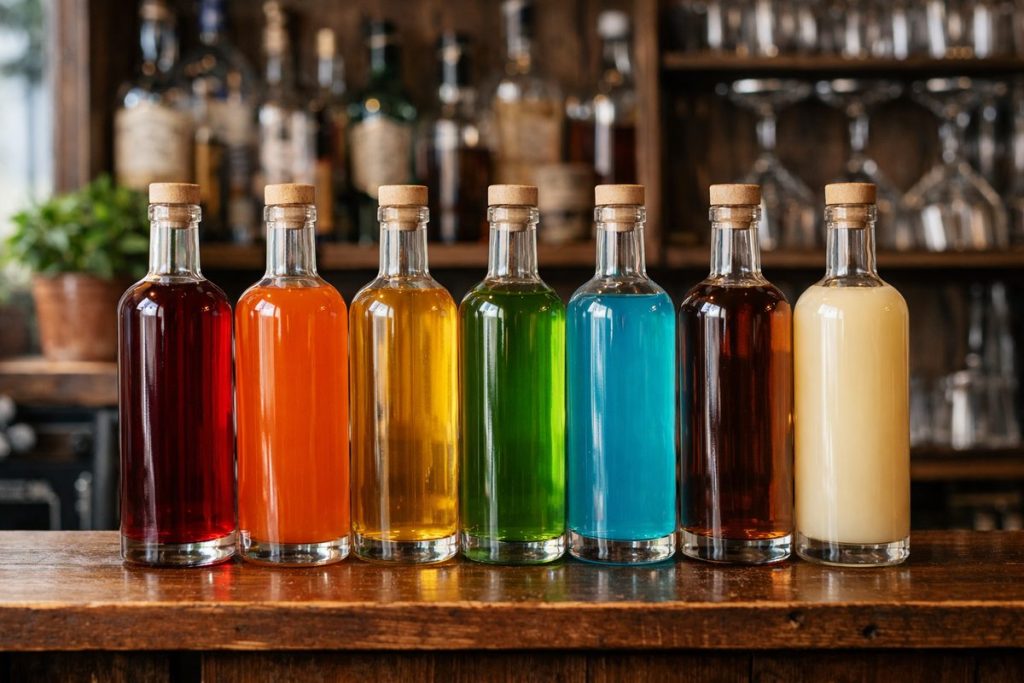
How a liqueur is made with essence
The basic recipe is simple:
- Start with a neutral spirit, such as vodka, bought with duty paid.
- Add sugar or syrup for sweetness and body.
- Add the essence according to the dosage on the bottle.
- Mix, let it rest and adjust to taste.
Coffee, chocolate, orange, cream and berry styles are classics. The same base can be used for several flavours, which makes a small range easy to manage.
Ideas for bars and restaurants
- A house liqueur served with dessert or coffee.
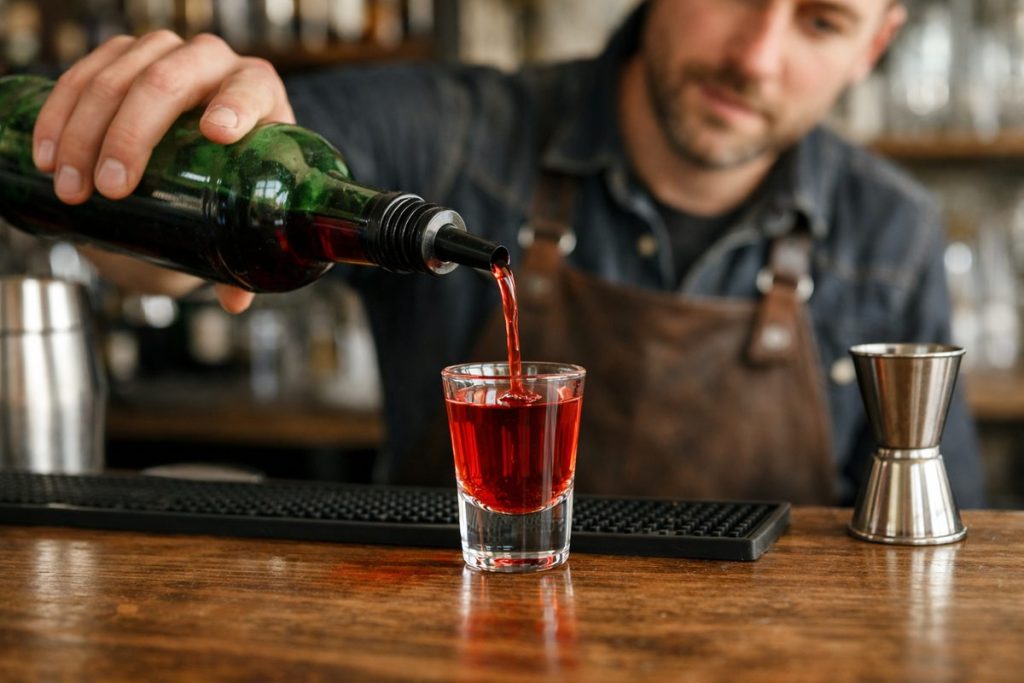
- A signature shot with a flavour that is yours.
- Cocktail bases that save time behind the bar.
- Seasonal specials for Christmas or summer.
Because you start from a spirit you already buy, the extra cost per serving is mainly the sugar and the essence.
The rules in short
You may flavour and mix drinks for your customers under your premises licence. Producing spirits drinks for sale in bottles is different: it requires approval from HMRC and the right labelling, so licensed producers use essences as part of their approved production. Distilling without a licence is illegal in the UK, also for personal use, and essences should never be marketed for that.
Choosing the size
Start with 20 or 50 ml bottles to test flavours, move to 280 ml or 1 litre for the flavours you use every week, and consider bulk only when you have steady volume. Read more about essences in 5 and 25 litres.
The full range of liqueur essences is in the trade shop. Homebrew retailers can read how essences fit into a range in stocking a homebrew shop.
Essences in 5 and 25 litres: when buying in bulk makes sense
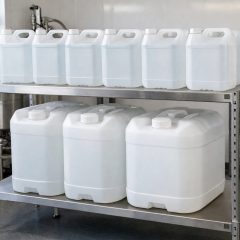
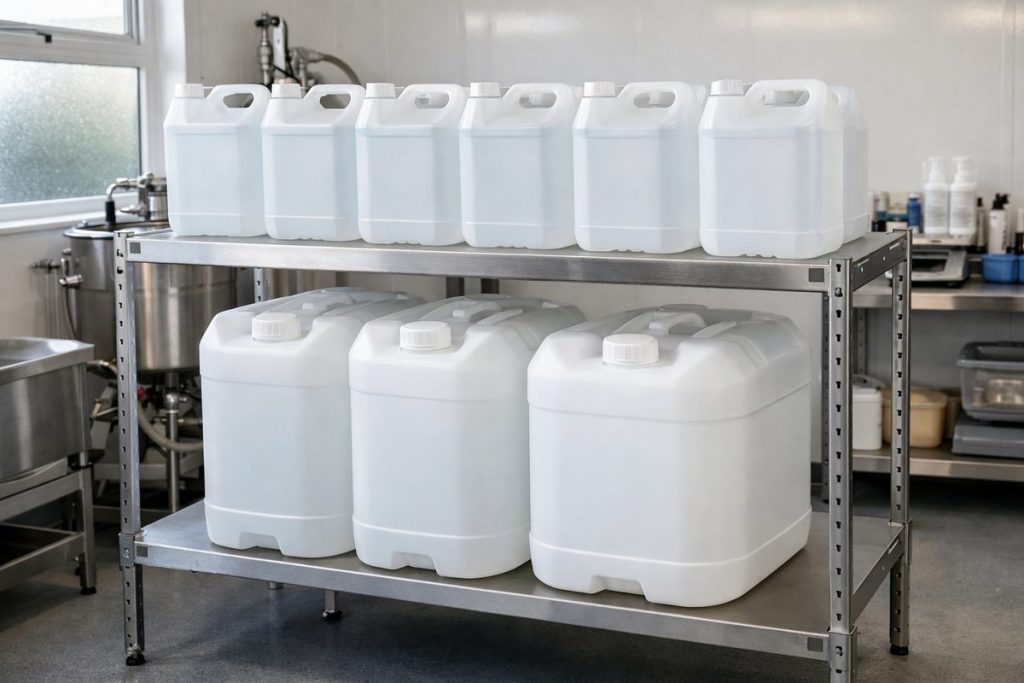
Short answer: Bulk essences in 5 and 25 litre containers are for businesses that use the same flavour week after week: licensed drinks producers, flavour houses, bars with their own house liqueurs, and retailers who repack under their own label. The price per millilitre drops sharply, but only if you will use the essence before its best before date and can store and handle it properly.
Who buys in bulk?
- Licensed spirits and liqueur producers who flavour a base spirit in batches.
- Soft drink and syrup makers who use the same flavour in every production run.
- Bars and restaurants with a house liqueur or flavoured drink on the menu.
- Retailers and webshops who repack essence into small bottles under their own brand. Read more about private label.
If you only use a few bottles a month, the 280 ml and 1 litre bottles are often the better choice.
The four questions to ask first
1. How much will you use before the best before date? Work out your monthly use and check that a 25 litre container will be used up in time. If not, the 5 litre size is safer.
2. Can you store it properly? Essences should be kept closed, cool and away from sunlight. A 25 litre container also weighs over 25 kg and needs space and a safe way to pour.
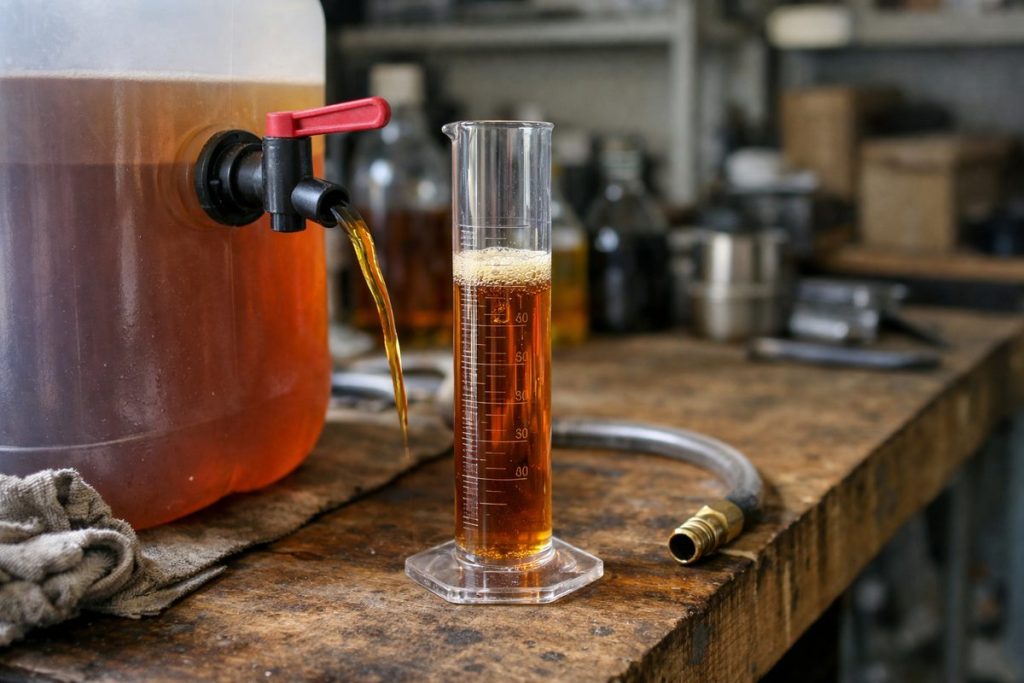
3. Can you dose accurately from a large container? You need a tap or a pump, clean measuring equipment and a routine for closing the container after use.
4. Will you repack it? If you fill small bottles, you become responsible for labelling and traceability. Keep batch numbers from the container on your own labels.
The cost
Compare the price per millilitre across sizes: small bottles, 1 litre, 5 litre and 25 litre. Then add the cost of pumps, bottles and labels if you repack. The calculation is the same as for any concentrate. We show it step by step in cost per bottle.
Stay on the right side of the rules
Essences are used to flavour drinks and foods. Spirits production in the UK requires approval from HMRC, so bulk spirit essences are for licensed producers or for flavouring spirits that have been bought with duty paid. Never describe them as a way to make spirits at home.
See essences in bulk 25 litres and essences in 5 litres. For how delivery and parcels work, read buying wholesale from Sweden.
Sparkling water flavours: an easy upsell for cafés, offices and gyms
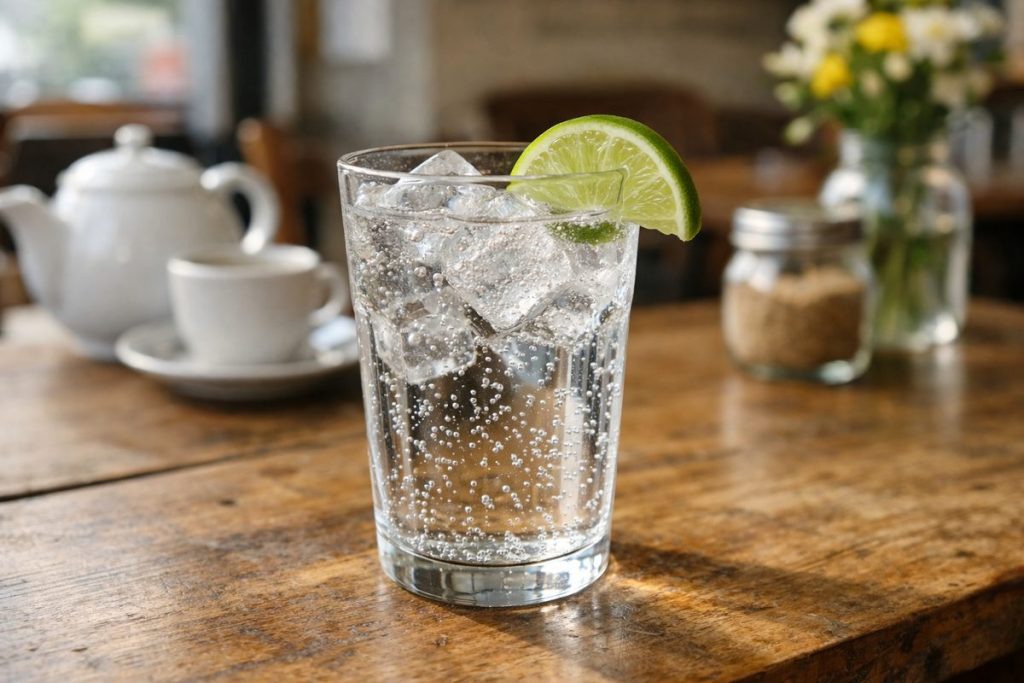
Short answer: Sparkling water flavour is a concentrated flavouring you add to plain sparkling water. A small bottle of 32 to 50 ml flavours 16 to 25 litres, and a 100 or 200 ml bottle flavours 50 to 100 litres. It turns tap water from a carbonator into a drink you can sell or offer, at a cost of very little per glass.
Why it works
Many customers want something lighter than a soft drink but more interesting than plain water. Flavoured sparkling water fills that gap. It suits:
- Cafés and restaurants that already have a sparkling water tap or chiller
- Offices with a water dispenser or soda machine in the kitchen
- Gyms, spas and leisure centres that sell drinks at reception
- Hotels and B&Bs that want a welcome drink with a difference
If you already have a carbonator, the only new cost is the flavour.
How to use it
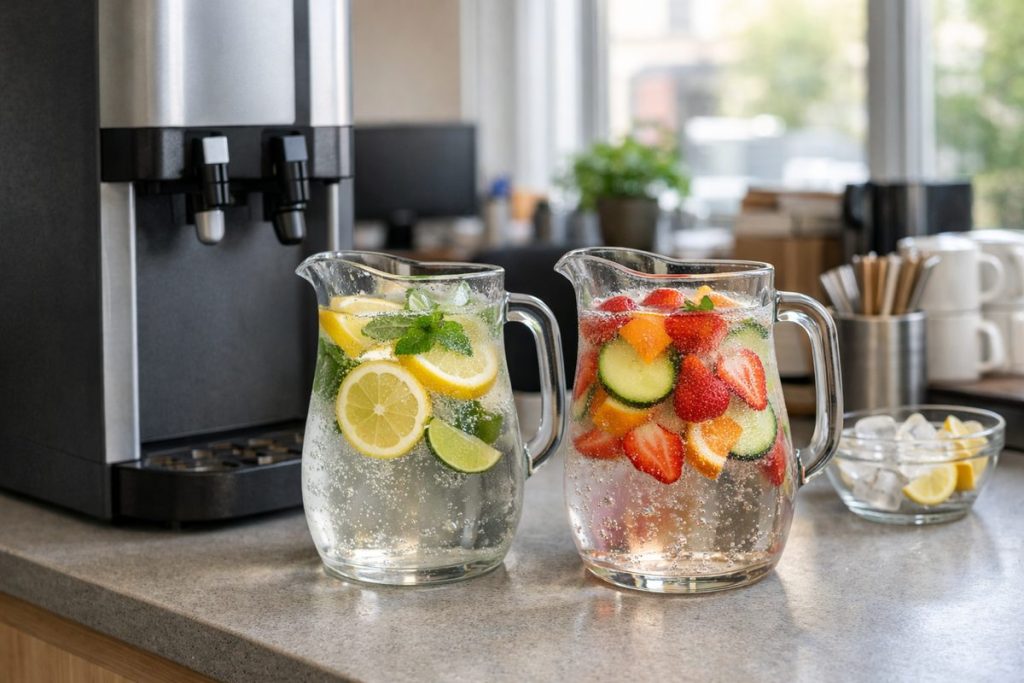
- Fill a jug, bottle or glass with cold sparkling water.
- Add the flavour according to the dosage on the bottle. A few drops per glass, or a measured amount per litre.
- Stir gently, so you keep the bubbles.
Mix by the jug for service, or let customers flavour their own glass at a self-service station. Write the dose on a card next to the machine so every jug tastes the same.
Selling it
- On the menu: “House sparkling water, flavoured” as a cheaper alternative to soft drinks.
- As a refill: a flavoured refill for customers with their own bottle.
- In meal deals: an option that costs you less than a can.
- In shops and webshops: small bottles sell well next to soda machines and reusable bottles. Read more about selling drink concentrates in a shop or webshop.
Know what is in it
Keep the product specification to hand so staff can answer questions about ingredients and allergens. If the flavour contains a sweetener, say so on the menu or the dispenser.
See the range of sparkling water flavours in the trade shop. If you want a fuller drink with sweetness and body, read how to make a house soda for a café or restaurant.
Labelling a soft drink in the UK: what small producers must include
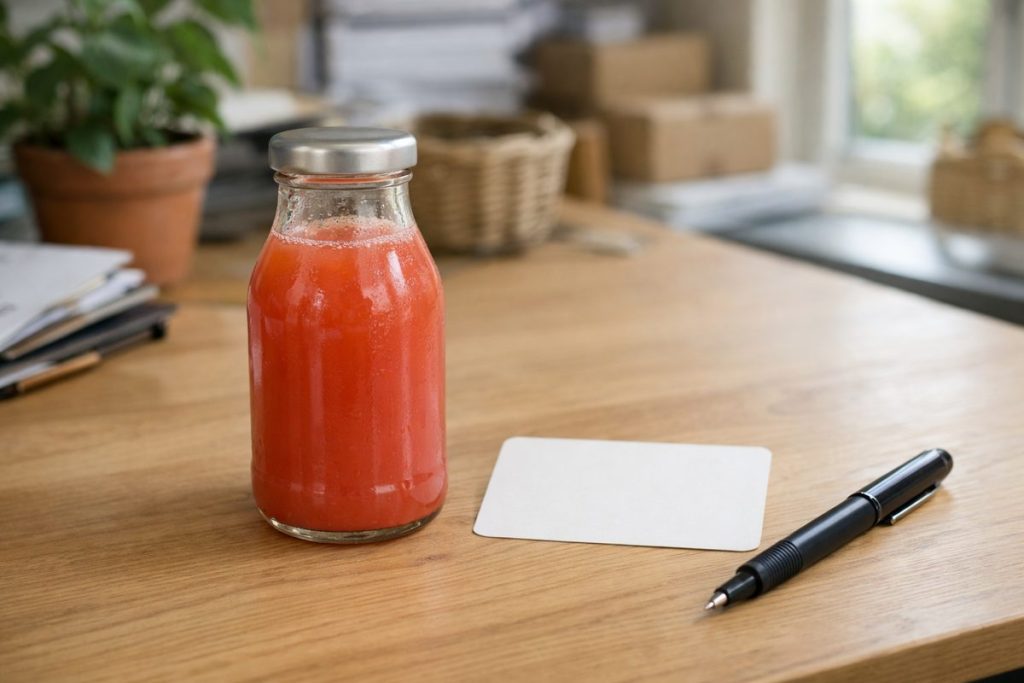
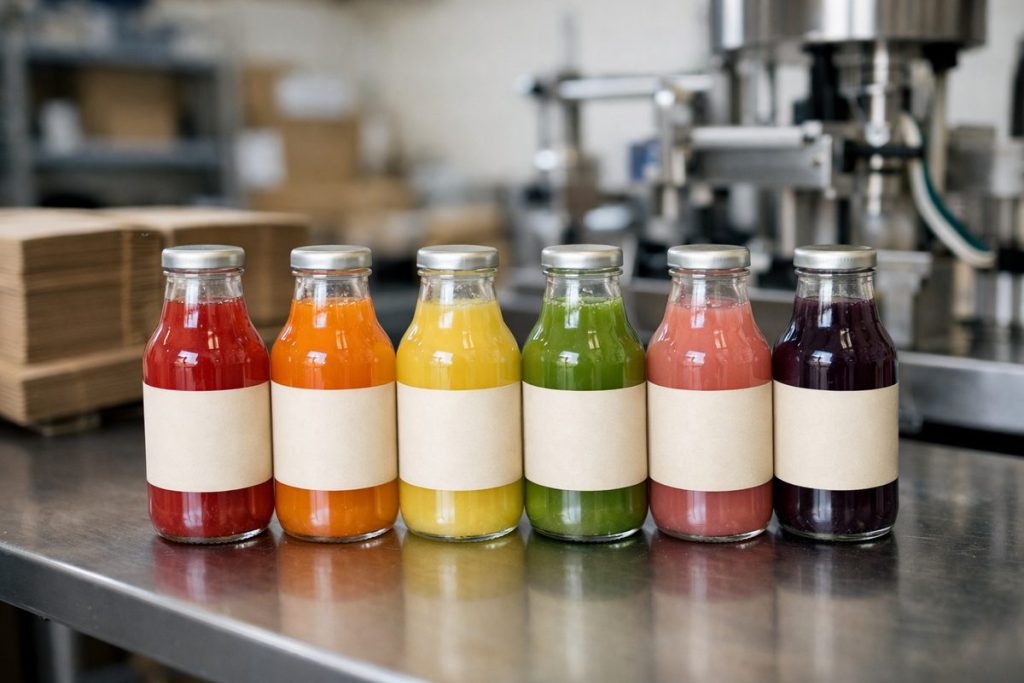
Short answer: A bottled soft drink sold in the UK must have a label with the name of the drink, the ingredients with allergens emphasised, the net quantity, a best before date, storage instructions where needed, and the name and UK address of the business. A drink with sweeteners must also say “with sweetener” or “with sweeteners” next to its name. Build the label from your supplier’s product specification, not from memory.
Why it matters
A wrong label is one of the most common problems for small food businesses. It can mean bottles taken off the shelf, a visit from trading standards, or worse, a customer with an allergy getting the wrong information. The good news is that a soft drink label is simple once you know what has to be on it.
This is a practical summary for small producers. Always check the current guidance from the Food Standards Agency or your local authority, especially if your drink is unusual.
The checklist
1. The name of the food. A name that tells the customer what it is, such as “Rhubarb still drink”. A brand name on its own is not enough.
2. The ingredients list. All ingredients in descending order of weight, starting with water. Take the ingredients of the concentrate from the supplier’s specification and include them in your list.
3. Allergens. Any of the 14 regulated allergens must be emphasised in the ingredients list, for example in bold. Many fruit drink concentrates contain none, but check the specification for every flavour.
4. The sweetener statement. If the drink contains a sweetener, such as sucralose, the words “with sweetener(s)” must appear with the name of the drink.
5. The net quantity. In millilitres or litres, for example 330 ml.
6. A best before date. Base it on your own storage test, not on a guess.
7. Storage conditions. For example “Store in a cool, dry place. Once opened, keep refrigerated and drink within 3 days.”
8. Your business name and UK address. The business responsible for the drink, which is you if your name is on the label.
9. Batch or lot number. So you can trace the bottle back to the day it was made.
Nutrition information
Most pre-packed foods must also have a nutrition declaration. Some very small producers who supply small quantities directly to consumers or local shops may be exempt. The rules are detailed, so check whether the exemption applies to you before you leave it out. For a sugar-free still drink the values are low, which can also be a selling point.
Claims on the label
“Sugar-free” and “no added sugars” are nutrition claims with legal conditions. They are normally fine for a drink sweetened only with sweeteners, but keep them accurate and do not add health claims, such as “good for your immune system”, unless they are authorised.
Make it look good too
Once the legal text is right, the rest of the label is yours. Many small producers do well with a clear flavour name, a local touch (“made in our farm kitchen”) and the words “sugar-free” visible from a distance.
Further reading
Start with bottling your own still drink, and work out the numbers with cost per bottle. If you plan a range under your own brand, read about private label drinks. Product specifications for the still drink concentrates are available to trade customers.
Cost per bottle: how to work out your margin on a still drink
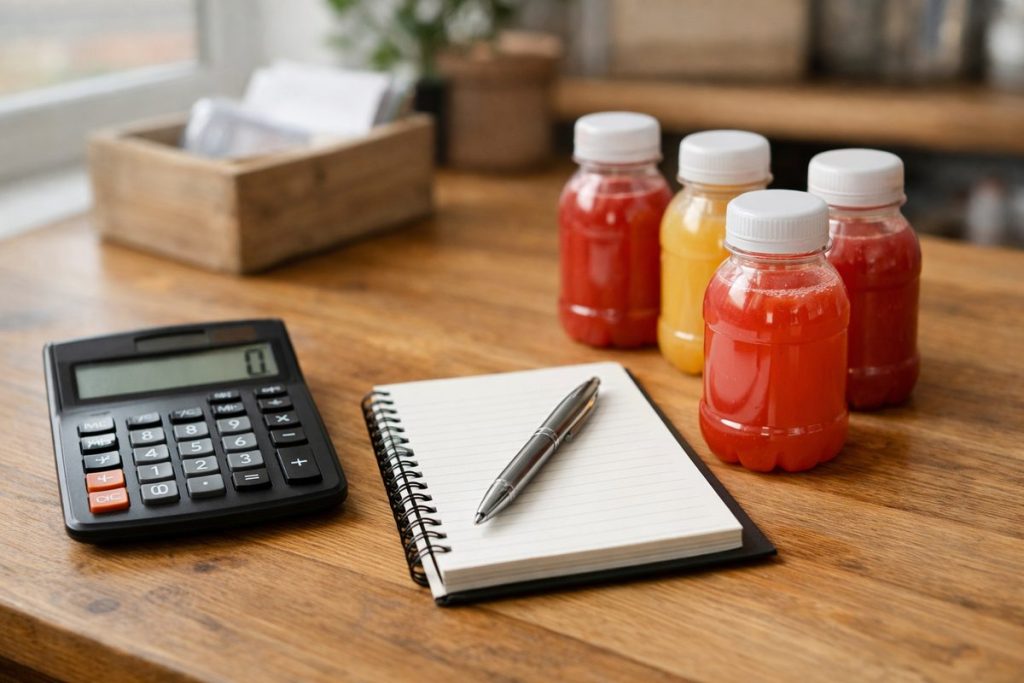
Short answer: Add up five things per bottle: concentrate, water, bottle, cap and label. Then add a share of your time and any delivery or marketplace fees. With a concentrate that is mixed 1 to 32, the drink itself is usually the cheapest part. The packaging is what you need to watch.
Step 1: the drink
Start with the concentrate. Take your net price for one bottle or container and divide it by the number of litres it makes:
- 500 ml of concentrate makes 16.5 litres
- 2 litres of concentrate makes 66 litres
- 5 litres of concentrate makes 160 litres
That gives you the cost per litre of finished drink. Multiply it by the size of your bottle. A 330 ml bottle uses a third of a litre, so it costs a third of the price per litre.
Water is almost free if you use mains water through a filter, but count the filter cartridges if you change them often.
Trade prices for the still drink concentrates are shown to registered businesses. The larger sizes give the lowest cost per litre.
Step 2: the packaging
Write down your price per unit for:
- the bottle (glass or PET)
- the cap
- the label, including printing
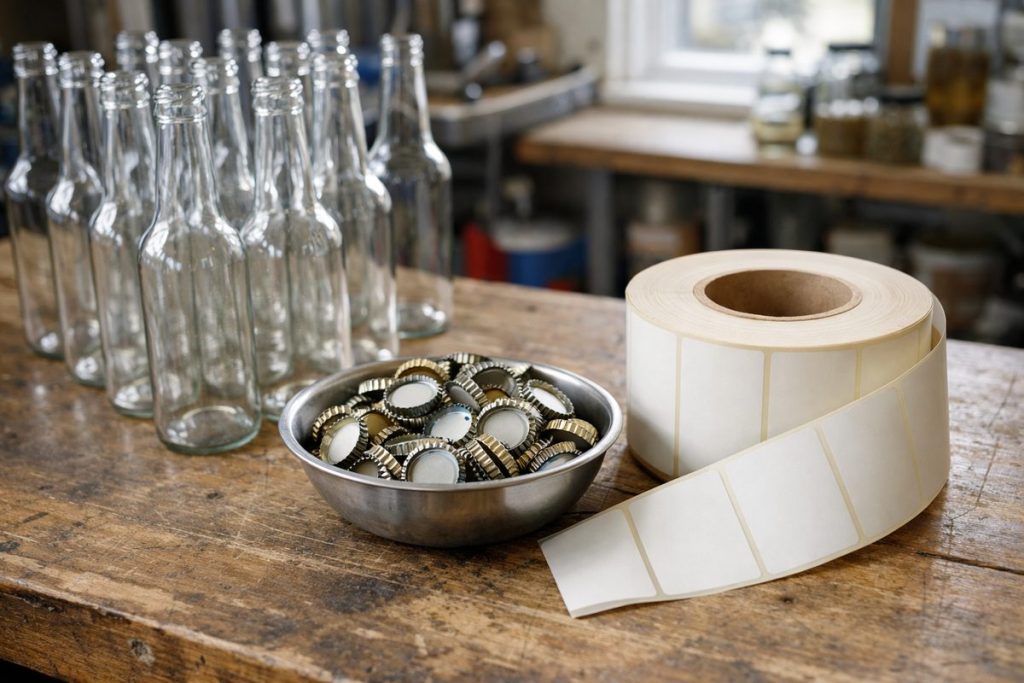
For most small producers these three together cost more than the drink inside. Buying bottles by the pallet from a packaging wholesaler brings the price down, but ties up space and cash. Some producers start with PET and move to glass when sales are steady.
Step 3: your time
Time how long it takes to make one batch, from cleaning to the last label, and divide by the number of bottles. Even if you do not pay yourself yet, count it. It shows you how much you gain by making larger batches.
Step 4: selling costs
Add the costs of getting the bottle to the customer:
- delivery to shops, or postage for online orders
- marketplace or card fees
- the shop’s margin if you sell through retailers
A shop usually wants to make its own margin on top of your price, so your trade price has to leave room for that.
An example to fill in
| Per 330 ml bottle | |
|---|---|
| Concentrate | your net price ÷ litres × 0.33 |
| Water and filter | a fraction of a penny |
| Bottle | your price |
| Cap | your price |
| Label | your price |
| Time | your hourly cost ÷ bottles per hour |
| Total cost | the sum |
When you know your total cost, compare it with what similar drinks sell for in your area. Price by what customers will pay, not by what the drink costs you.
Ways to improve the margin
- Make larger batches to spread cleaning and setup time.
- Buy concentrate in larger sizes once you know which flavours sell.
- Sell some of the volume yourself, in your own shop, taproom or market stall, where you keep the full price.
- Offer a larger bottle or a jug size for cafés, where the packaging cost per litre is lower.
Next steps
If you are new to soft drinks, start with our guide to bottling your own still drink or, if you have a bottling line, zero-sugar still drinks for small breweries. If you want to sell under your own brand, read about private label drinks.
Bottling your own still drink: a guide for farm shops, juice producers and small food businesses
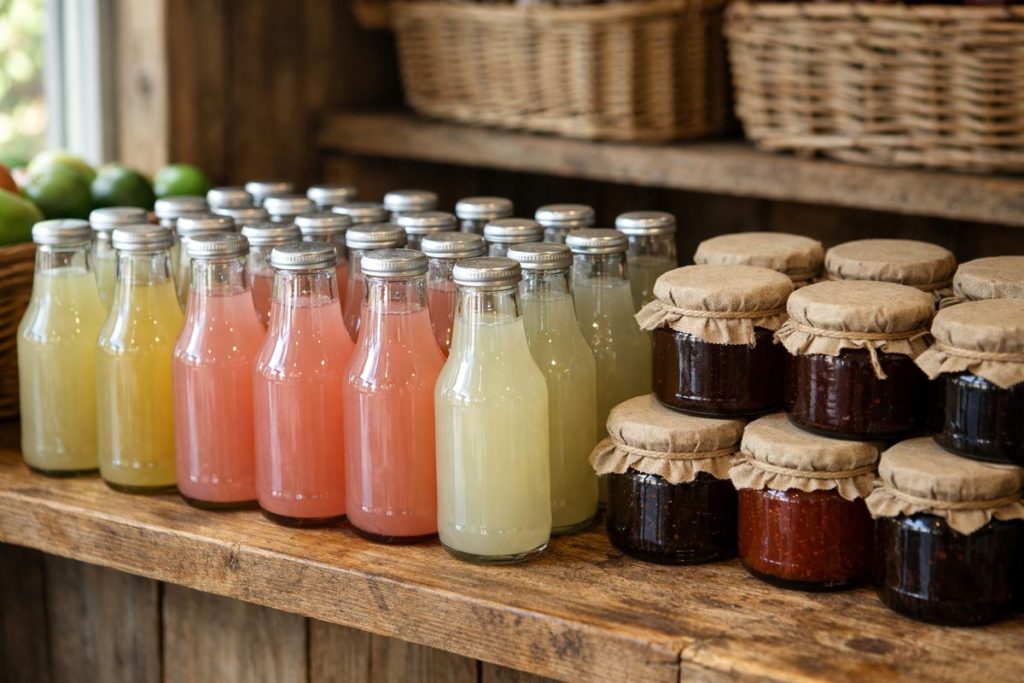
Short answer: You do not need a brewery to bottle a soft drink. A farm shop, an apple presser, a jam maker or a small café kitchen can make a sugar-free still drink with a clean mixing vessel, a hand filler and a capper. The concentrate is mixed 1 part to 32 parts water, so the drink is cheap to make, and it gives you a bottled product to sell all year round.
Who this suits
Still drinks fit almost any business that already sells food or drink and has a little kitchen or production space:
- Farm shops that want a local drink next to their own produce
- Apple and juice pressers who have bottles, caps and a pasteuriser, and quiet months between harvests
- Jam, chutney and sauce makers who already label and sell through shops and markets
- Market traders and caterers who want a drink to sell with their food
- Cafés and delis that want a bottled house drink to sell in the fridge
What they have in common is that they already have customers. A drink is an easy extra item in a basket that is already being filled.
The equipment you need
For small batches you need surprisingly little:
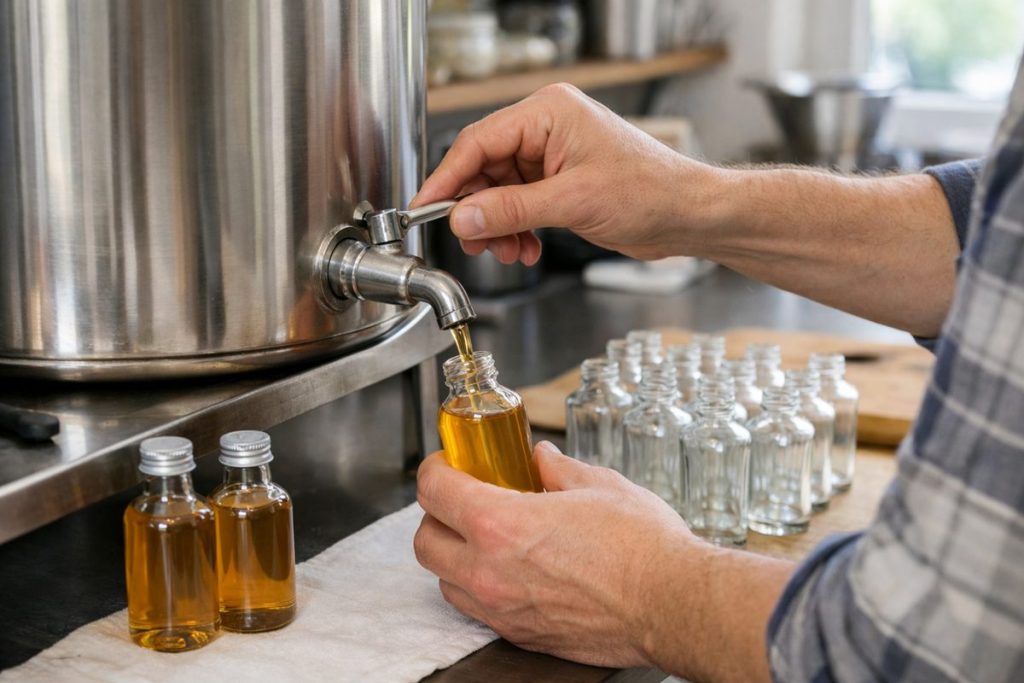
- a food-grade mixing vessel with a tap, 20 to 60 litres
- a measuring jug and scales
- a water filter if your tap water tastes of chlorine
- a simple gravity or hand filler
- a capper for your chosen caps
- bottles, caps and labels
If you already press juice, you probably have most of this. If you want a longer shelf life, a pasteuriser of the kind used for juice can be used for still drinks too.
A simple production day
- Clean and sanitise everything that will touch the drink.
- Measure the water and add the concentrate at 1 to 32. A 2 litre bottle of concentrate makes 66 litres of drink.
- Stir gently until even, and taste a sample.
- Fill, cap and label the bottles straight away.
- Write down the date, the batch, the flavour and how much you made.
Clean as you go and keep the mixed drink cool. A soft drink has no alcohol to protect it, so hygiene decides how long it keeps. Test your own shelf life with a few bottles stored for several weeks before you decide on a best before date.
Which flavours to start with
Choose flavours that fit what you already sell. A farm shop with a rhubarb patch could start with rhubarb. A shop that sells strawberries in summer could sell a strawberry still drink next to them. Grapefruit, blood orange and pineapple are good all-year flavours, and a blend such as grapefruit with passion fruit gives you something few others have. See the full range of still drink concentrates.
The rules
Making and selling drinks makes you a food business. Register with your local authority, keep a simple food safety plan for the steps you carry out, and label the bottles correctly. The label needs, among other things, the name of the drink, the ingredients, the net quantity, a best before date, your business name and address and, because the drink contains sweeteners, the words “with sweetener(s)”. Because the drink is sweetened without sugar, the Soft Drinks Industry Levy does not apply to it.
Is it worth it?
Work out the full cost per bottle before you set a price. The concentrate is usually a small part of it; the bottle, cap and label cost more. If you plan to sell under your own brand, read about private label drinks. Breweries and cideries with a bottling line can read our guide to zero-sugar still drinks for small breweries and bottlers.
Selling drink concentrates in a shop or webshop: a range customers come back for
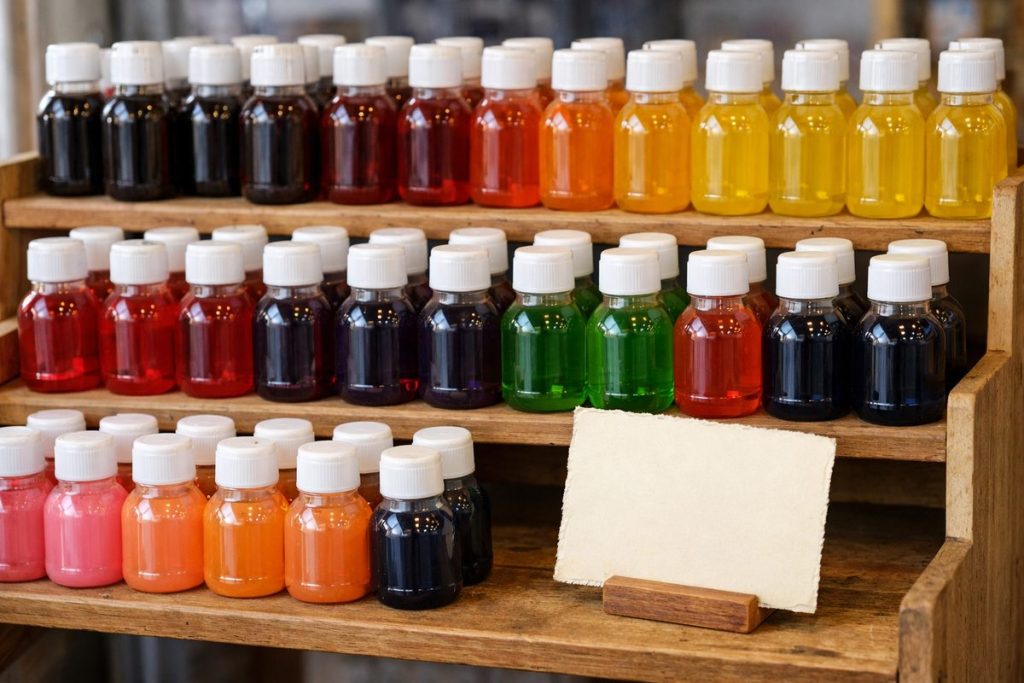
Short answer: Drink concentrates are among the easiest products a small shop can add. They are small and light, they keep for a long time, and customers who like a flavour come back for it. A 500 ml bottle of still drink concentrate makes 16.5 litres of drink, which is a strong argument at the counter and on a product page.
Who buys concentrates?
More people than you might think:
- Families who want a cheap, sugar-free alternative to squash and cans
- Offices and gyms that want something better than plain water
- Party planners and parents buying slush for birthdays and events
- Homebrewers who want a soft drink for the non-drinkers
- Small cafés and caterers who buy a few bottles before committing to larger sizes
That makes concentrates a good fit for homebrew shops, delis, farm shops, health food shops and webshops alike.
Build a small, clear range
Start with three groups:
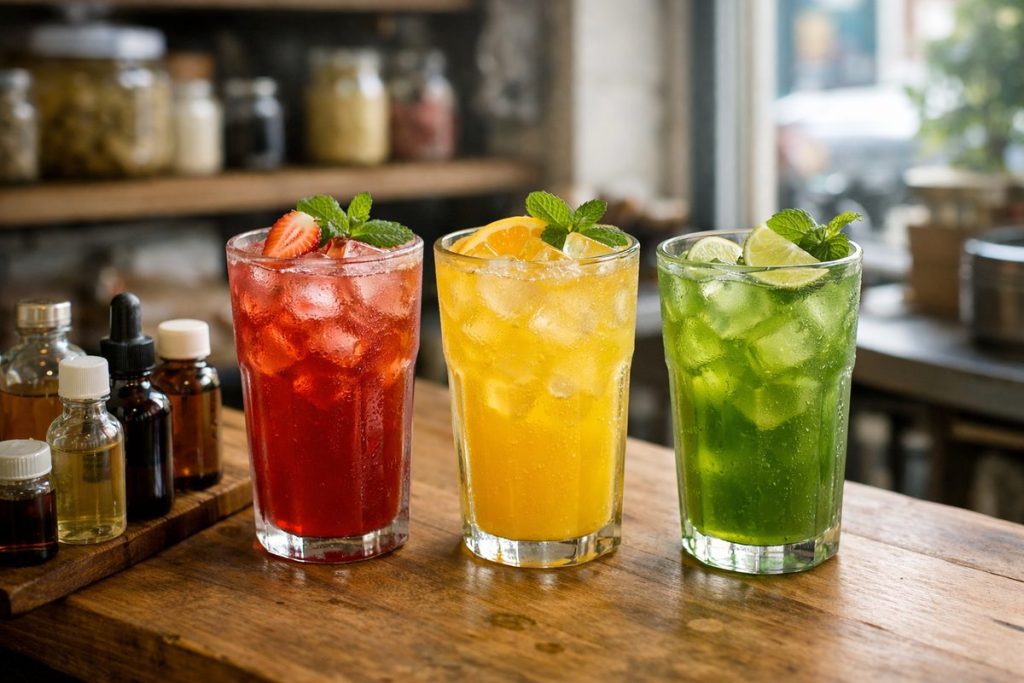
- Still drink concentrates. Sugar-free, mixed with still water. Choose four to six flavours, such as grapefruit, blood orange, rhubarb, pineapple and a blend.
- Soda concentrates. For customers with a soda machine at home. See the zero soda concentrates.
- Slush concentrates. Seasonal, strong in spring and summer. Read more in slush for cafés and lunch restaurants.
Put the most popular flavour at eye level and keep a tester or a recipe card next to it.
Sell the number of litres
The strongest selling point for a concentrate is how much drink it makes. Say it on every shelf label and product page:
- “Makes 16.5 litres” for a 500 ml still drink concentrate
- “Makes 66 litres” for a 2 litre bottle
- “Makes 9 litres of slush” for a 500 ml sugar-free slush concentrate
Customers compare it with the price of a bottle of squash or a pack of cans, and the concentrate usually wins.
Online: easy to ship
Concentrates are ideal for a webshop. They fit in small parcels, they rarely break when packed well, and they are bought again. Write a short product description with the flavour, the mixing ratio, how much drink it makes and the ingredients. A photo of the finished drink in a glass sells better than a photo of the bottle alone.
Buy little and often
You do not need a large stock to start. With a mixed trade parcel of up to 30 kg you can order a few bottles of many flavours together with your other products, at one shipping price, and reorder the flavours that sell. Read how ordering works in buying wholesale from Sweden, and see how concentrates fit with the rest of the shelf in stocking a homebrew shop.
The full range of still drink concentrates is in the trade shop.
Turbo yeast or wine yeast? What homebrew retailers should stock and why
Short answer: Wine yeast is chosen for flavour. It ferments at a steady pace and leaves a clean, fruity wine, cider or mead. Turbo yeast is chosen for speed and strength. It is a complete blend of yeast and nutrients that ferments a sugar solution quickly and to a high alcohol level, but it adds little flavour of its own. A homebrew shop needs both, and staff who can explain the difference.
Wine, cider and mead yeast
A wine yeast is a selected strain of *Saccharomyces* yeast. Different strains suit different drinks:
- Red and white wine yeasts for grape and fruit wines.
- Cider yeasts that keep the apple character.
- Mead yeasts that cope with honey musts, which are often low in nutrients.
- All-round yeasts for country wines made from berries, rhubarb or elderflower.
A wine yeast usually ferments over one to three weeks and stops at around 12 to 15 per cent alcohol, depending on the strain. It often needs a separate yeast nutrient, especially for fruit and honey musts.
Who buys it? Customers making wine, cider and mead, who care about flavour and are happy to wait.
Turbo yeast
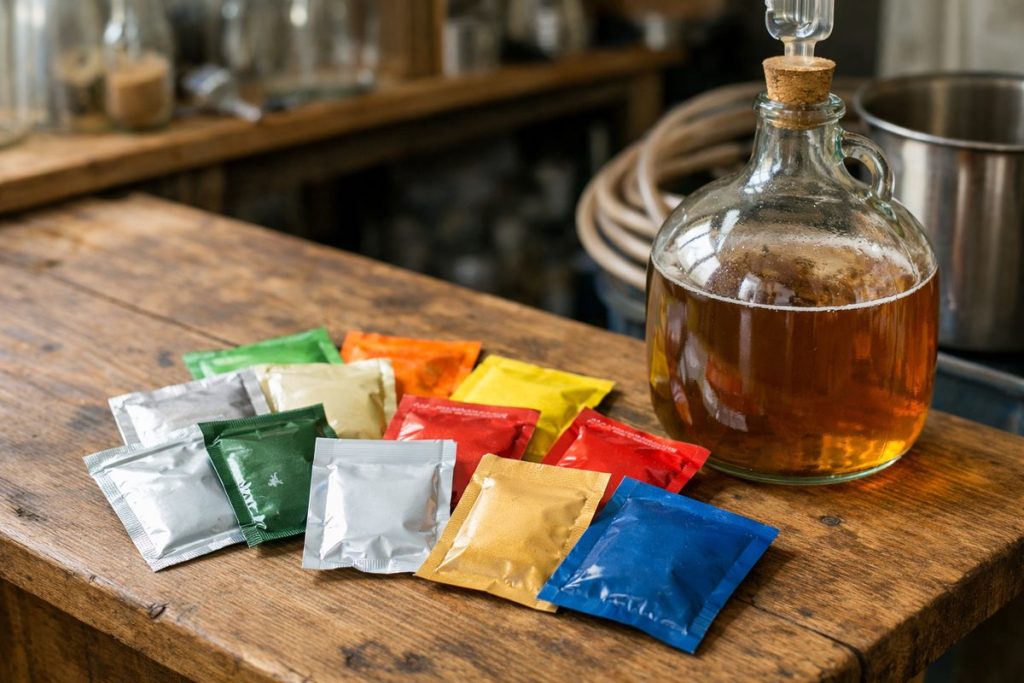
A turbo yeast is a yeast strain that tolerates high alcohol levels, packed together with the nutrients it needs. Customers add one sachet to a large volume of sugar solution and the yeast does the rest. Turbo yeasts are known for:
- Speed. Many ferment in a few days rather than weeks.
- High alcohol tolerance. Some reach 14 to 20 per cent alcohol under the right conditions.
- Simplicity. Nutrients are included, so there is nothing else to measure.
- A neutral result. The yeast is not chosen for flavour.
Because of the neutral result and the speed, turbo yeast is less suited to a wine where taste matters. It is used for neutral bases, for example a base for flavoured drinks or fruit liqueurs. It is one of the best-selling single products in many homebrew shops, so it should never be out of stock. See the turbo yeast range.
What to tell customers
A short set of questions helps staff recommend the right yeast:
- What are you making? Wine, cider or mead points to a wine yeast. A neutral base points to turbo yeast.
- Does the taste of the yeast matter? If yes, choose a wine yeast.
- How warm is the room? Every yeast has a temperature range. Too warm gives off-flavours; too cold stops the fermentation.
- Do you have yeast nutrient? Sell it with every wine yeast for fruit and honey musts.
Keep it legal
Making wine, cider, mead and beer at home for your own use is legal in the UK. Distilling spirits is not, unless you hold a licence from HMRC, and that applies to small stills and personal use too. Retailers should describe yeasts for fermentation and never advise customers to distil at home. Keep your shelf labels, product pages and staff advice in line with this.
What to keep in stock
- Two or three wine yeasts for the most common drinks
- A cider yeast and a mead yeast
- One or two turbo yeasts, in single sachets and in larger packs for regular customers
- Yeast nutrient
- Clearing agents and anti-foam
All of these are found under yeast and regular yeast for wine, mead and cider in the trade shop. Yeast is light and keeps well when stored cool and dry, so it is a good product to buy in larger quantities. Read more about building the whole range in stocking a homebrew shop, and about ordering in buying wholesale from Sweden after Brexit.
Buying wholesale from Sweden after Brexit: shipping, VAT and customs explained
Short answer: Since 1 January 2021, goods sent from Sweden to Great Britain are imports. Someone has to make a customs declaration, import VAT has to be accounted for and, in some cases, duty has to be paid. The most important question for a buyer is therefore not where the goods come from, but who takes care of the import: the supplier or you.
What changed with Brexit
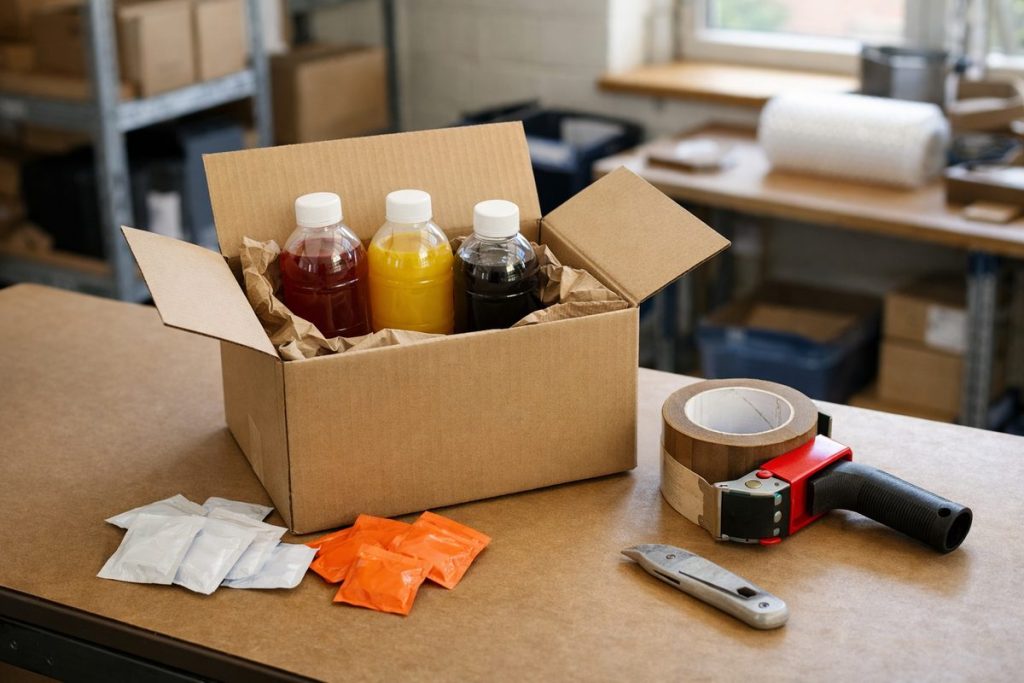
Before Brexit, a UK business could buy from a Swedish supplier just like from a supplier in Manchester. Now Great Britain is outside the EU customs union and VAT area. For goods from Sweden this means:
- A customs declaration is needed when the goods enter Great Britain.
- Import VAT of normally 20 per cent is charged on the value of the goods, shipping and any duty.
- Customs duty may apply, depending on the product and its origin.
Northern Ireland follows different rules for goods, so check separately if you are based there.
Who handles the import?
There are two common set-ups:
1. You import the goods yourself. The supplier sells from Sweden and you, or your courier on your behalf, make the import declaration and pay VAT and any duty. The courier usually charges a handling fee for this. You need an EORI number starting with GB.
2. The supplier delivers to your door with everything paid. The supplier, or its UK company, takes care of the import and sells to you as a UK business. You get a normal UK invoice and do not need to deal with customs at all.
The second option is much simpler for small businesses. When you compare prices, always compare the cost delivered to your door, including VAT, duty and fees.
How it works with buyfromsweden.uk
The trade shop is run by Buy From Sweden Ltd, a UK company and a subsidiary of Gert Strand AB in Sweden. That means the second, simpler set-up:
- The seller is a UK company. Your contract and your invoice are with Buy From Sweden Ltd, and UK VAT is shown on the invoice.
- Customs is already done. Goods are delivered duty paid and cleared, so you never deal with an import declaration, a courier’s customs fee or duty.
- One shipping price per parcel. Shipping costs the same whether the parcel weighs 1 kg or 30 kg. When your order has been picked and packed, you can top it up with more products, up to 30 kg, at no extra shipping cost.
- You pay before dispatch. You receive an invoice when the parcel is packed. Once it is paid, the parcel is sent, and delivery takes about a week from order to door.
Postponed VAT accounting
If you do import yourself and are VAT registered, you can usually use postponed VAT accounting. You then declare the import VAT on your normal VAT return and reclaim it on the same return, instead of paying it at the border. This helps your cash flow. Ask your courier to use postponed VAT accounting and keep the monthly statements from HMRC.
Customs duty and origin
The UK and the EU have a trade agreement that allows zero duty on goods that originate in the EU or the UK. “Originate” has a precise meaning: the product must meet the rules of origin, and the supplier must state the origin on the invoice. Goods that are only passed through Sweden, without being made there, may not qualify. If duty matters for your margin, ask the supplier about the origin of each product.
Why trade parcels make sense
Many wholesalers want you to buy a full pallet or a full case of each product. For a small shop, café or webshop that means too much money tied up in stock, and too few different products on the shelf.
A mixed trade parcel works the other way round. One parcel of up to 30 kg can hold a little of many different products: a few bottles of one concentrate, a box of yeast, some essences and a handful of accessories. You can buy as little of each product as you like, so you can try a wide range of products that are hard to find elsewhere in the UK, see what your customers buy, and reorder only what sells.
A checklist before your first order
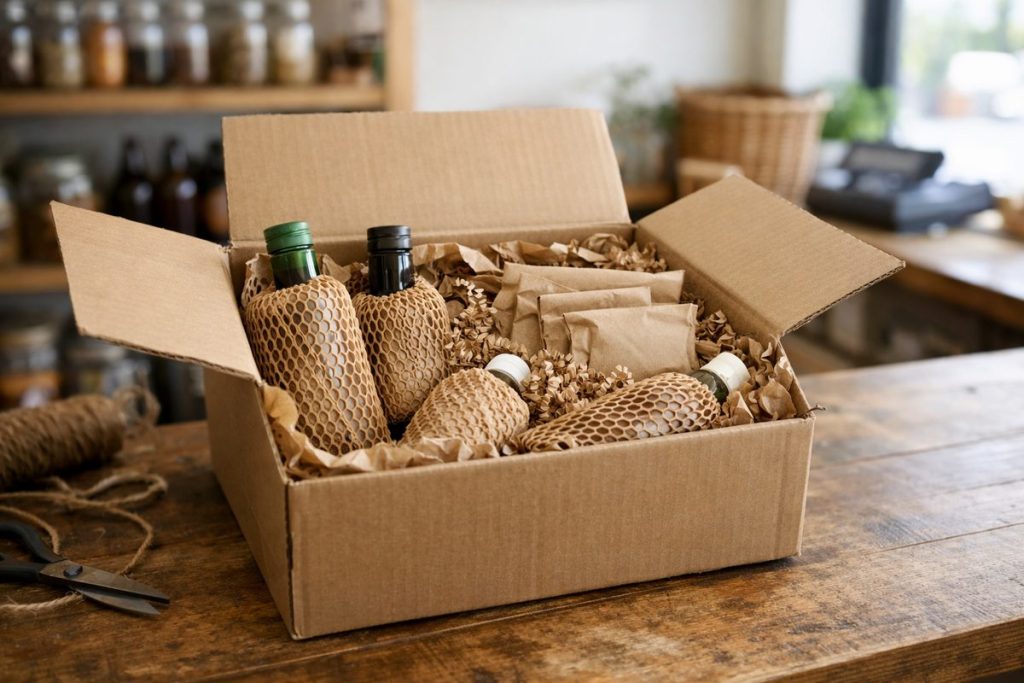
- Is the price delivered to your door, or ex works?
- Who makes the import declaration, and who pays VAT and duty?
- Will you get a UK VAT invoice?
- How long does delivery take, and what happens if a parcel is damaged?
- Is there a minimum order?
- Can you get product specifications with ingredients and allergens?
Getting started
Trade prices are shown after you register a business account in the shop. If you are building a range, start with our guides to stocking a homebrew shop and to zero-sugar still drinks for small breweries.
Customs and VAT rules change from time to time. This article is a general guide, not tax advice. Check GOV.UK or ask your accountant about your own situation.
Private label drinks: building your own brand on Swedish concentrates
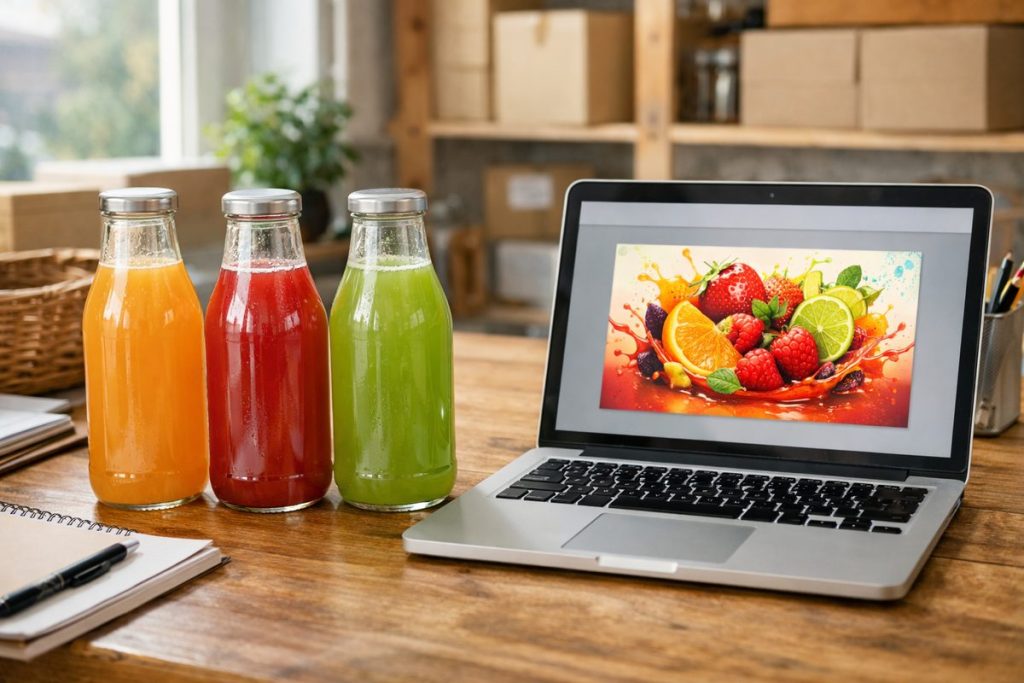
Short answer: You do not need your own recipe or factory to start a drinks brand. With a ready-made concentrate you can either bottle a finished drink under your own name, or sell the concentrate itself in your own packaging. The recipe and flavour work is already done, so you can spend your time on the brand, the label and the customers.
Two ways to build a private label range
1. Bottle a finished drink. You mix the concentrate with water, bottle it and sell ready-to-drink bottles under your own brand. This suits breweries, cideries, farm shops and small bottlers who already have a bottling line. We explain the production side in our guide to zero-sugar still drinks for small breweries and bottlers.
2. Sell the concentrate. You sell the concentrate itself, so the customer mixes the drink at home or at work. Concentrates are light and compact, which makes them well suited to webshops and subscription boxes. One 500 ml bottle of still drink concentrate makes 16.5 litres of drink, so the shipping cost per litre of finished drink is low.
You can also start simpler: sell the products under their own brand in your shop or webshop first, find out which flavours your customers like, and build your own label when you know what sells.
Who you are under UK food law
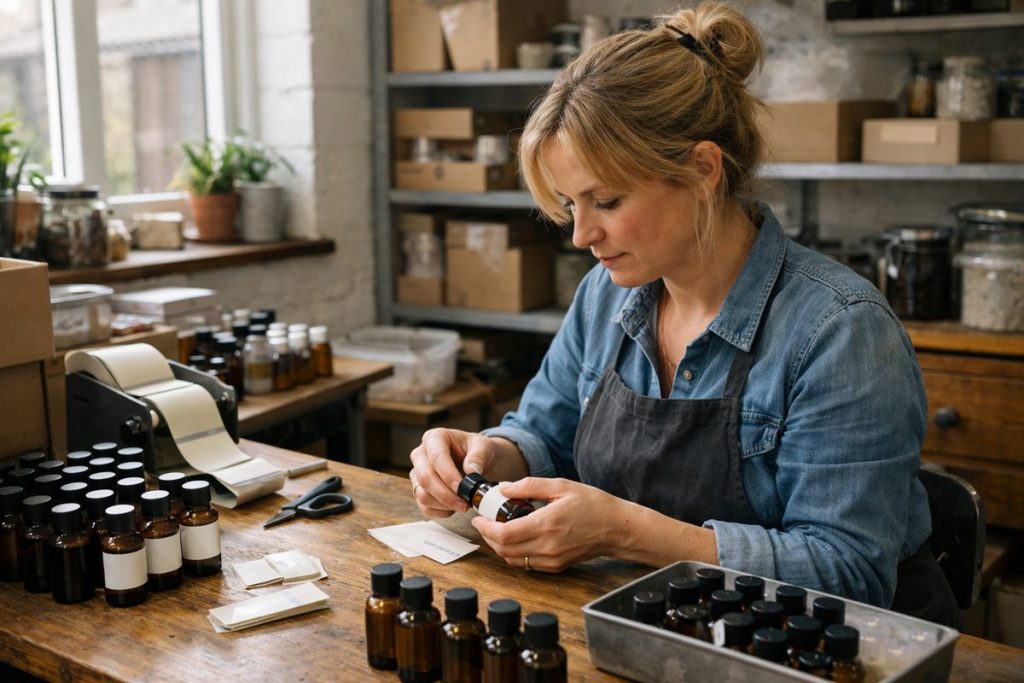
As soon as you put your own name on a food or drink, you take on responsibility for it. In practice this means:
- Register as a food business with your local authority at least 28 days before you start trading.
- Have a food safety plan based on HACCP principles for the steps you carry out, such as mixing, bottling or repacking.
- Label correctly. The label must include the name of the food, the ingredients with allergens emphasised, the net quantity, a best before date, storage conditions, and the name and UK address of your business. A drink with sweeteners must say “with sweetener(s)”.
- Keep records of batches and suppliers so you can trace every product.
Your supplier provides product specifications with ingredients and allergens. Keep them on file and build your labels from them, not from memory.
Choosing the range
Start narrow. Three flavours that suit your brand are better than twelve that compete for shelf space. Some combinations that work well:
- A sugar-free range for health-conscious customers, gyms and offices.
- A “Scandinavian” range with rhubarb, gooseberry and berry flavours.
- A party and summer range with slush concentrates and bright fruit flavours.
Order small quantities of several flavours to test. Then buy in larger sizes, such as 2 litre and 5 litre containers, when you know what sells.
What it costs to start
The main costs are usually not the concentrate. They are:
- bottles, caps and labels
- label design
- your time for mixing, filling and packing
- shipping and marketplace fees if you sell online
Work out the full cost per bottle before you set a price, and remember that marketplaces like Amazon take a fee on every sale.
Selling online
Concentrates are a good fit for a webshop: they are light, they keep well and customers reorder. Photograph the finished drink, not only the bottle, and explain how much drink one bottle makes. That number is often the strongest selling point.
The concentrates are available to registered businesses in the trade shop, for example the still drink concentrates. If you are new to importing, read how shipping, VAT and customs work when buying from Sweden. Homebrew retailers who want to add drinks concentrates to their range can also read what to stock in a homebrew shop.