Short answer: You do not need a brewery to bottle a soft drink. A farm shop, an apple presser, a jam maker or a small café kitchen can make a sugar-free still drink with a clean mixing vessel, a hand filler and a capper. The concentrate is mixed 1 part to 32 parts water, so the drink is cheap to make, and it gives you a bottled product to sell all year round.
Who this suits
Still drinks fit almost any business that already sells food or drink and has a little kitchen or production space:
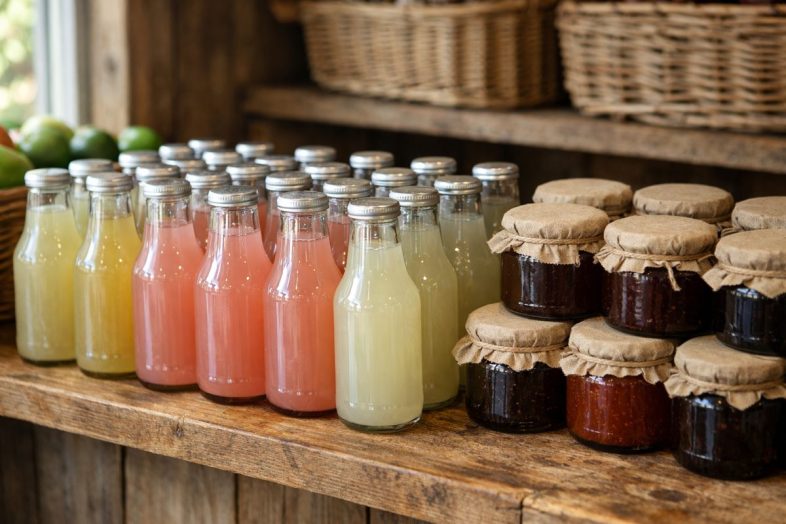
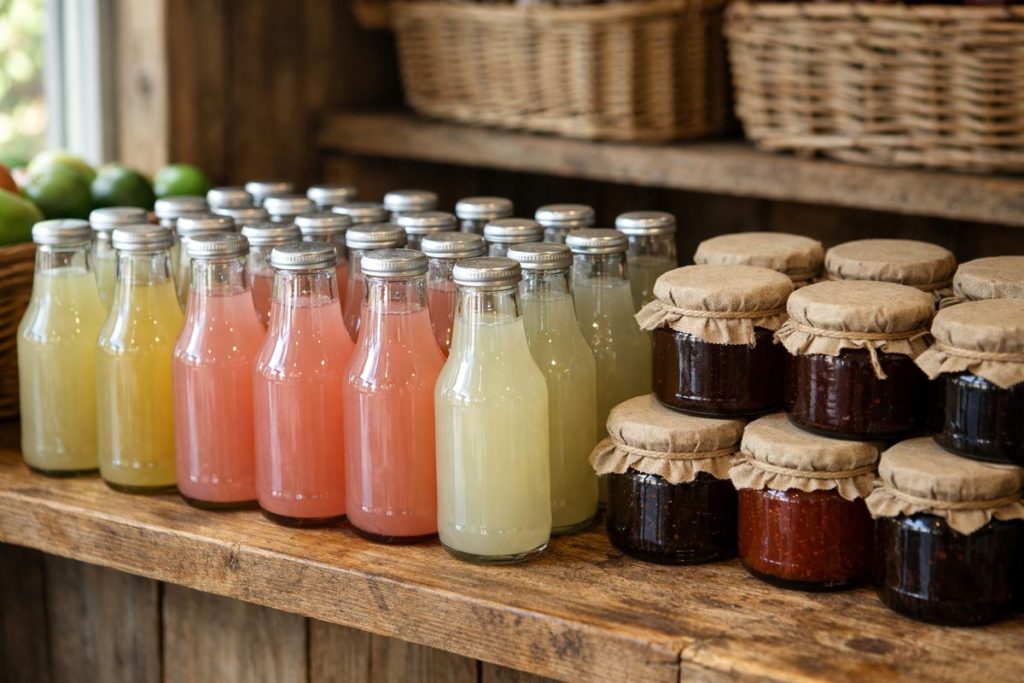
- Farm shops that want a local drink next to their own produce
- Apple and juice pressers who have bottles, caps and a pasteuriser, and quiet months between harvests
- Jam, chutney and sauce makers who already label and sell through shops and markets
- Market traders and caterers who want a drink to sell with their food
- Cafés and delis that want a bottled house drink to sell in the fridge
What they have in common is that they already have customers. A drink is an easy extra item in a basket that is already being filled.
The equipment you need
For small batches you need surprisingly little:
- a food-grade mixing vessel with a tap, 20 to 60 litres
- a measuring jug and scales
- a water filter if your tap water tastes of chlorine
- a simple gravity or hand filler
- a capper for your chosen caps
- bottles, caps and labels
If you already press juice, you probably have most of this. If you want a longer shelf life, a pasteuriser of the kind used for juice can be used for still drinks too.
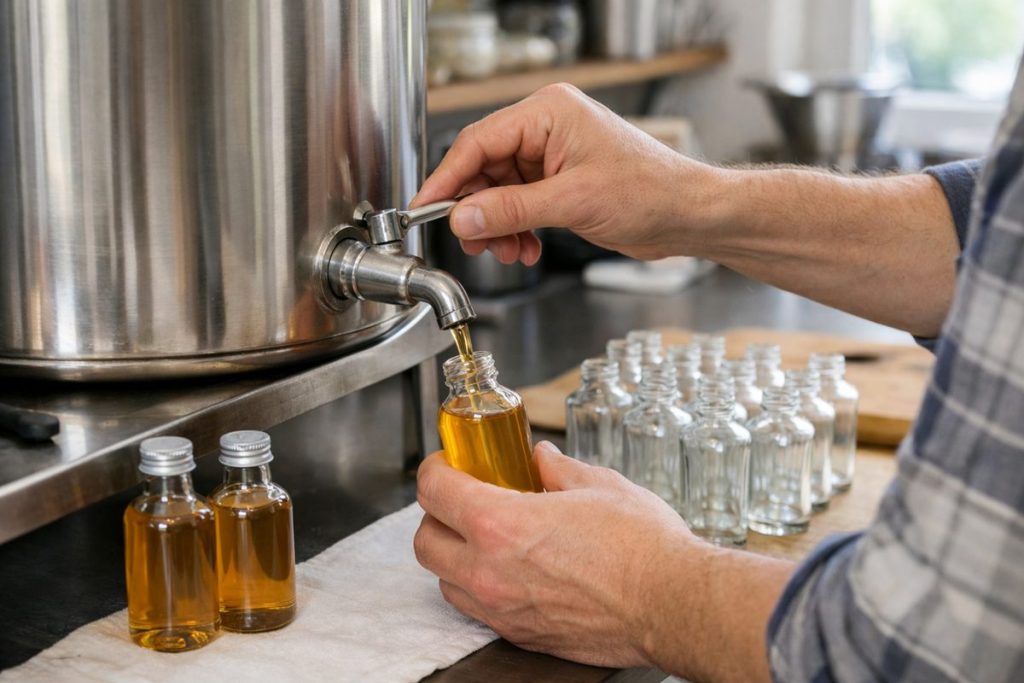
A simple production day
- Clean and sanitise everything that will touch the drink.
- Measure the water and add the concentrate at 1 to 32. A 2 litre bottle of concentrate makes 66 litres of drink.
- Stir gently until even, and taste a sample.
- Fill, cap and label the bottles straight away.
- Write down the date, the batch, the flavour and how much you made.
Clean as you go and keep the mixed drink cool. A soft drink has no alcohol to protect it, so hygiene decides how long it keeps. Test your own shelf life with a few bottles stored for several weeks before you decide on a best before date.
Which flavours to start with
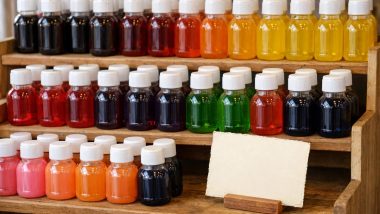
Choose flavours that fit what you already sell. A farm shop with a rhubarb patch could start with rhubarb. A shop that sells strawberries in summer could sell a strawberry still drink next to them. Grapefruit, blood orange and pineapple are good all-year flavours, and a blend such as grapefruit with passion fruit gives you something few others have. See the full range of still drink concentrates.
The rules
Making and selling drinks makes you a food business. Register with your local authority, keep a simple food safety plan for the steps you carry out, and label the bottles correctly. The label needs, among other things, the name of the drink, the ingredients, the net quantity, a best before date, your business name and address and, because the drink contains sweeteners, the words “with sweetener(s)”. Because the drink is sweetened without sugar, the Soft Drinks Industry Levy does not apply to it.
Is it worth it?
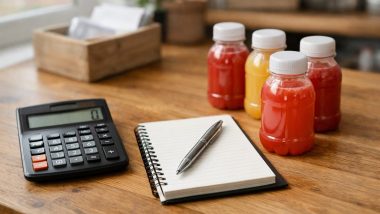
Work out the full cost per bottle before you set a price. The concentrate is usually a small part of it; the bottle, cap and label cost more. If you plan to sell under your own brand, read about private label drinks. Breweries and cideries with a bottling line can read our guide to zero-sugar still drinks for small breweries and bottlers.