admin
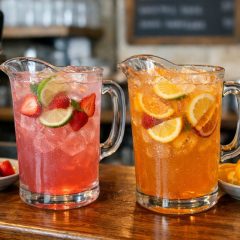
How to make your own house soda for a café or restaurant
Short answer: A house soda is a soft drink you mix yourself from a concentrate and water, either still or carbonated, and serve from a jug, a dispenser or a tap. It costs far less per glass than branded cans, it takes up less fridge space, and it gives your menu something customers cannot get anywhere else.
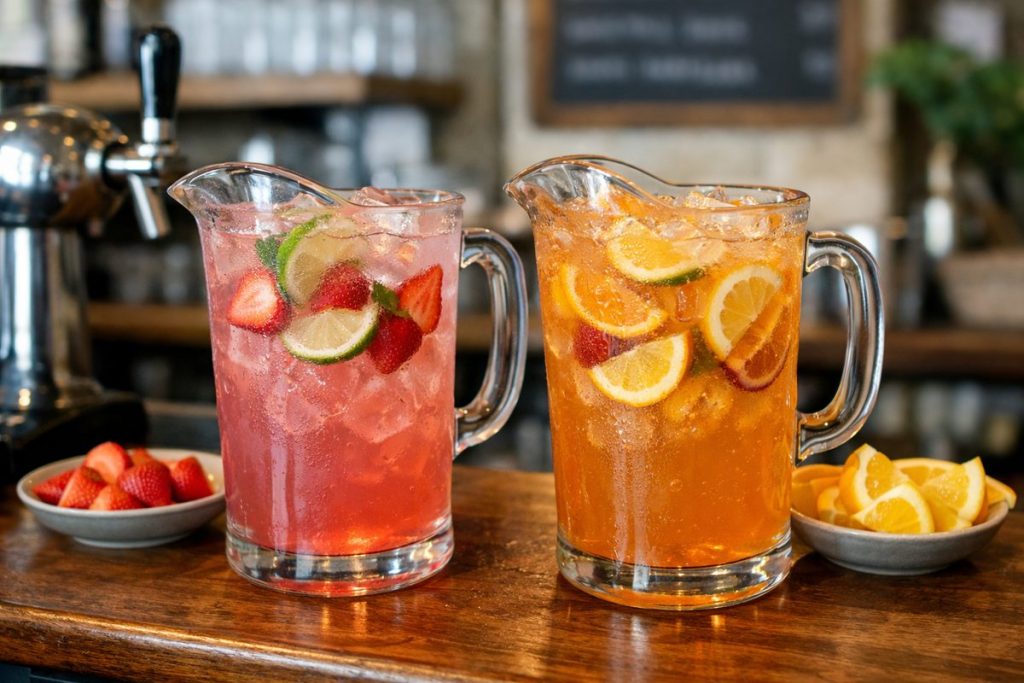
Why make your own?
Branded soft drinks are easy, but they are expensive per glass and they look the same in every café. A house soda gives you:
- A better margin. Concentrate and water cost much less per glass than a can.
- Less waste. No cases of cans to store, chill and recycle.
- A drink with your name on it. “Our rhubarb lemonade” is easier to remember than another cola.
- Flexibility. You can offer sugar-free versions, seasonal flavours and refills.
Still or sparkling?
Still house drinks are the easiest. Mix a still drink concentrate with cold water in a jug or a drinks dispenser and serve with ice. Zero-sugar still drink concentrates are mixed 1 part to 32 parts water, so one 500 ml bottle makes 16.5 litres. That is more than fifty large glasses. See the still drink concentrates.
Sparkling house sodas need carbonated water. There are three common ways to get it:
- A carbonated water tap or chiller, the kind many restaurants already have for water.
- A soda machine or siphon for small volumes.
- A keg and CO2 if you already serve draught drinks.
Add the soda concentrate to the sparkling water, or mix it in a keg and carbonate the finished drink. The zero soda concentrates are made for exactly this. Follow the ratio on the label so every glass tastes the same.
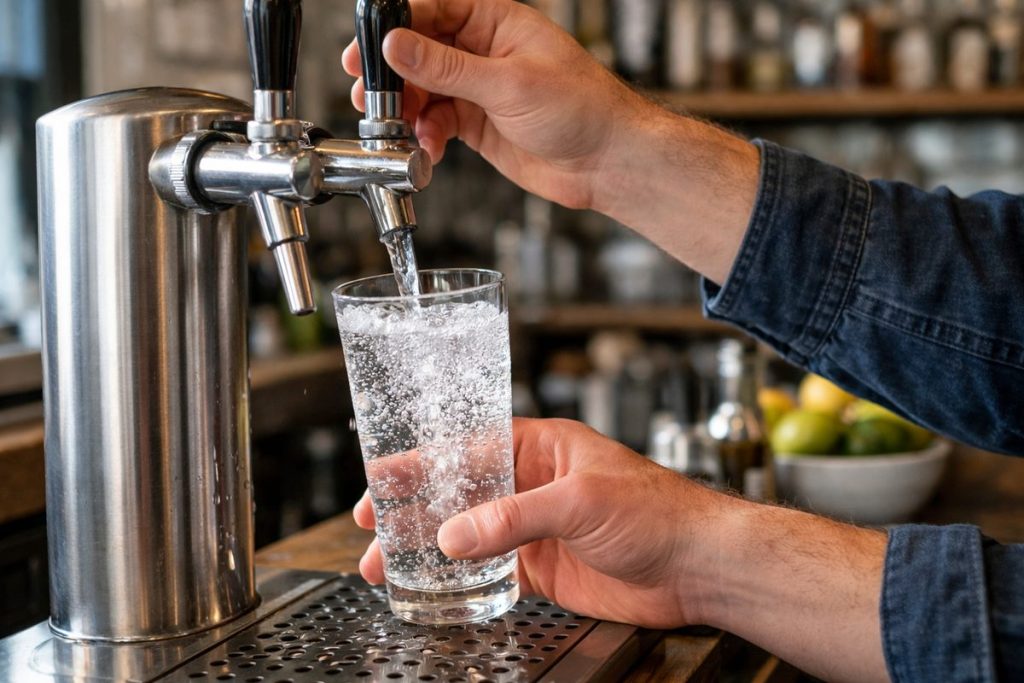
Flavoured sparkling water: the simplest option
If a full soda feels like too much, start with flavoured sparkling water. A few millilitres of a sparkling water flavour in a litre of sparkling water gives a light, unsweetened or lightly flavoured drink. Small bottles of 32 to 50 ml make 16 to 25 litres, and 100 to 200 ml bottles make 50 to 100 litres. See the sparkling water flavours.
Serving and hygiene
- Mix in small batches. Mix what you will sell in a day or a service and keep it chilled.
- Label your jugs and dispensers with the flavour and the time they were mixed.
- Clean dispensers and taps daily as part of your normal food hygiene routine.
- Know your allergens. Keep the product specifications to hand so staff can answer questions about ingredients and sweeteners.
Pricing
Work out your cost per glass: the net price of the concentrate divided by the number of glasses it makes, plus ice, a straw and a slice of fruit if you use one. Then price the drink the way you would price a coffee, by what customers expect to pay in your area, not by what it costs. Many cafés charge the same for a house soda as for a branded soft drink and keep the difference.
Ideas that sell
- A sugar-free lunch deal drink included in a meal offer.
- A jug for the table for groups and families.
- Seasonal flavours, such as rhubarb in spring and berries in summer.
- A “mocktail” menu with house sodas, fruit and herbs for customers who do not drink alcohol.
If you also want an ice-cold option for summer, read our guide to slush for cafés and lunch restaurants. Producers who want to bottle the drink for sale can read about zero-sugar still drinks for small breweries and bottlers.
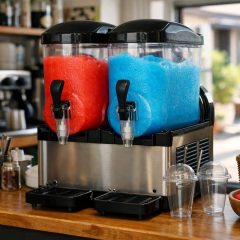
Slush for cafés and lunch restaurants: machines, mixing and margins
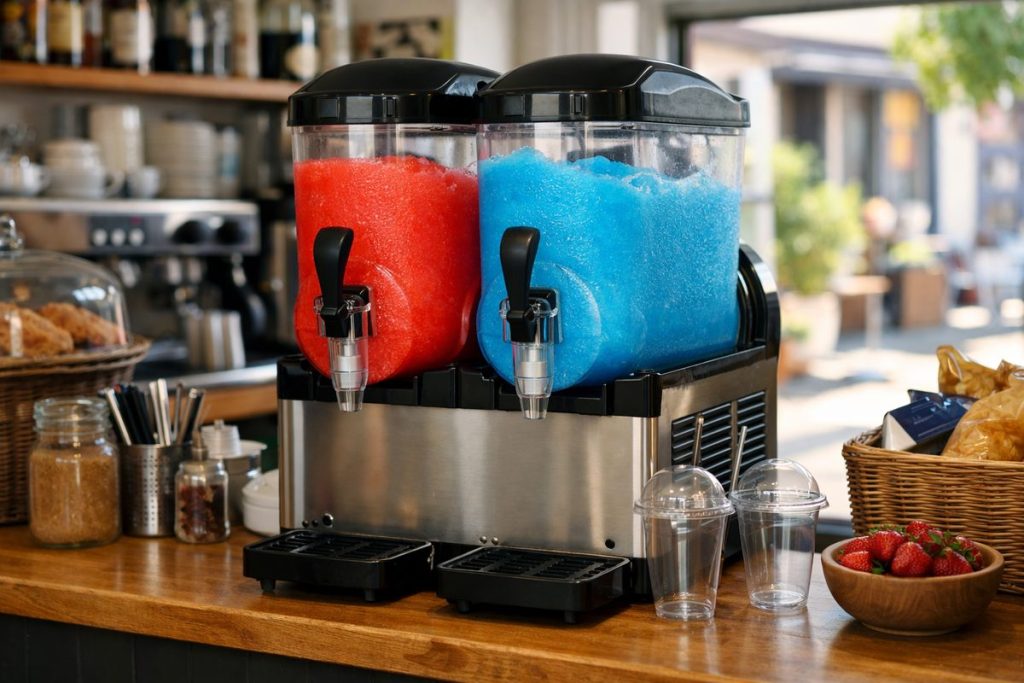
Short answer: Slush is one of the most profitable drinks a café, lunch restaurant or food stall can sell. A machine, a concentrate and water are all you need. A concentrate mixed 1+5 gives a classic sweet slush, while a sugar-free concentrate mixed 1+17 gives a lighter slush that goes much further per bottle. Work out your cost per cup, pick a few flavours and put the machine where customers can see it.
Why slush works so well
Slush sells on sight. A machine with bright colours turning on the counter does its own marketing, especially on warm days and wherever there are children, students or queues. It suits:
- cafés and sandwich bars with families as customers
- lunch restaurants near schools, colleges and offices
- kiosks, food trucks and market stalls
- leisure centres, campsites, cinemas and play centres
- events and festivals
Because the drink is mostly water and ice, the cost per cup is low and the margin is high.
1+5 or sugar-free 1+17?
There are two main types of concentrate in the slush range:
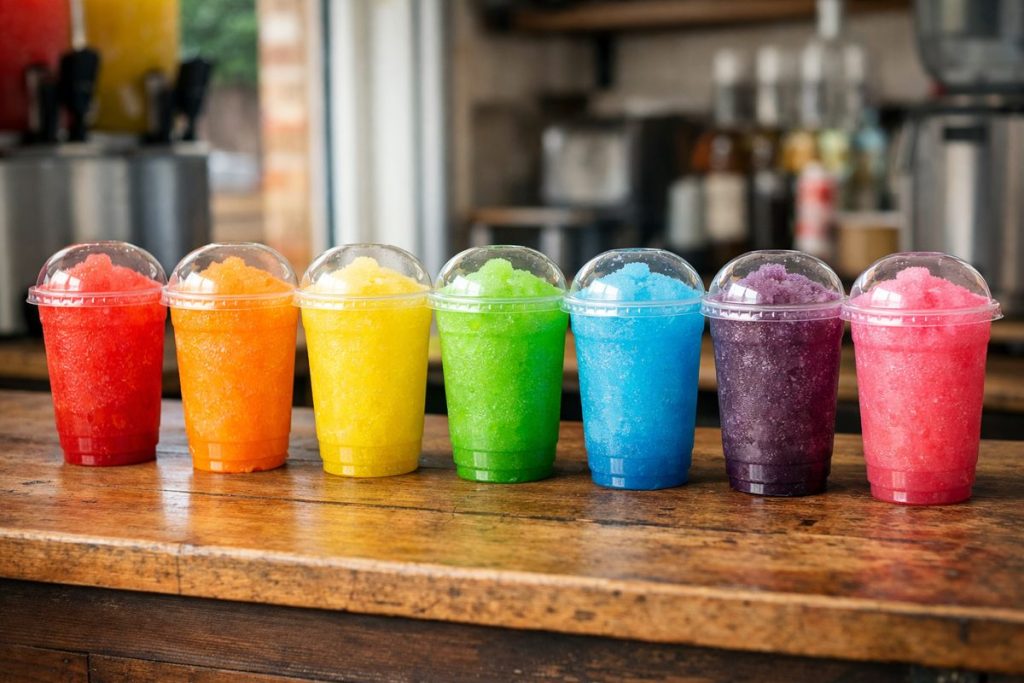
- Slush concentrate 1+5. One part concentrate to five parts water. This is the classic sweet slush most customers know. It comes in 500 ml and 5 litre bottles.
- Sugar-free slush 1+17. One part concentrate to seventeen parts water, sweetened without sugar. A 500 ml bottle makes 9 litres of slush and a 2 litre bottle makes 36 litres. See the sugar-free slush concentrates.
Many businesses offer one of each: a classic flavour for the traditional slush lover, and a sugar-free option for parents and adults who want something lighter.
How to mix
- Read the machine manual. Most machines have a minimum and maximum level for each bowl.
- Mix concentrate and cold water in the right ratio in a clean jug or bucket. Using cold water shortens the freezing time.
- Pour the mix into the bowl and switch on the freezing and stirring.
- Wait until the slush has the right texture. The first batch of the day takes the longest.
- Top up with ready-mixed liquid during the day, never with plain water or plain concentrate.
Always follow the ratio. Too little concentrate gives a slush that freezes into hard ice. Too much gives a slush that never freezes properly.
Glycerol and children: follow the FSA advice
Many slush drinks contain glycerol, which keeps the drink soft instead of freezing solid. The UK Food Standards Agency advises that slush drinks containing glycerol should not be sold to children under 4, and that children aged 4 to 10 should have no more than one a day. Check the specification of the concentrate you use, follow the current FSA guidance and put a clear sign by the machine if it applies to your drink. It shows parents that you take it seriously.
What a cup costs
Work it out like this:
- Find your net price per bottle of concentrate.
- Divide it by the litres of slush it makes. A 1+5 mix gives 6 litres of slush per litre of concentrate. A 1+17 mix gives 18 litres.
- Divide by the number of cups per litre. A 300 ml cup gives just over three cups per litre.
- Add the cup, lid and straw.
The cup and lid often cost as much as the slush inside. That is why slush has such a good margin even at a modest price.
Getting the most out of the machine
- Place it in sight. By the entrance or the till, not hidden behind the counter.
- Two flavours are enough to start. One red and one blue is the classic choice.
- Offer a combo. A slush with a lunch deal or a kids’ meal sells more cups.
- Clean it properly. Follow the manufacturer’s cleaning schedule. A clean machine is part of your food hygiene routine.
Slush fits well next to other house drinks. Read how to make a house soda for a café or restaurant, or how a small producer can bottle zero-sugar still drinks for sale.
Stocking a homebrew shop: the products that keep customers coming back
Short answer: A homebrew shop lives on repeat sales. The starter kit is sold once, but yeast, nutrients, clearing agents, flavourings and small parts are bought again and again. Build your range around those consumables, keep the basics always in stock and add a few products that give customers a reason to try something new.
Think in three layers
It helps to divide the shop into three layers.
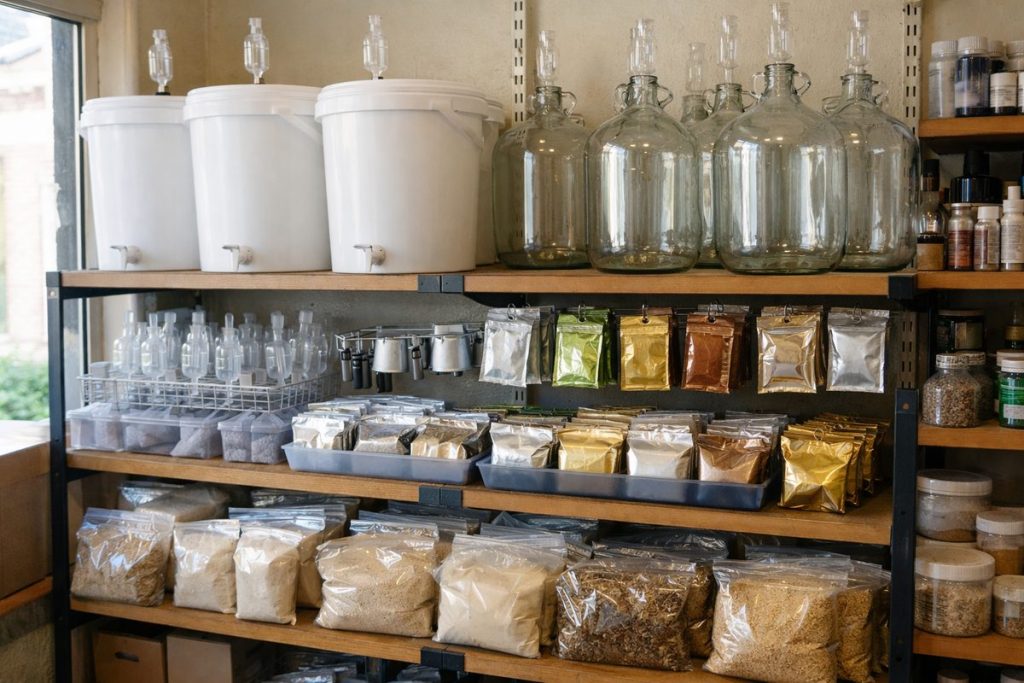
1. Equipment that is bought once. Fermenting buckets, demijohns, taps, siphons, hydrometers and bottles. These bring new customers in, but they do not come back for them every month.
2. Consumables that are bought every batch. Yeast, yeast nutrient, clearing agents, anti-foam, sterilisers, activated carbon and flavourings. This is where the repeat business is, and these products must never be out of stock.
3. Products that create interest. New flavours, seasonal ingredients, books and kits for mead, cider or fruit wine. They give regular customers a reason to visit again and something to talk about.
The consumables to always have
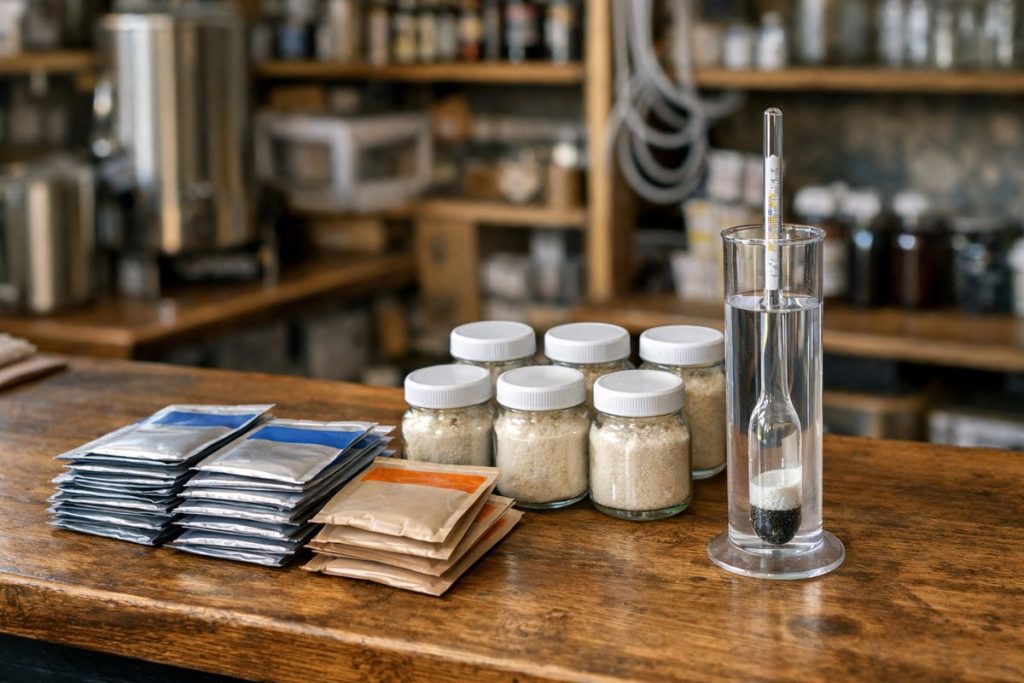
- Wine yeast and cider yeast. Customers making fruit wine, country wines, cider and mead need a reliable yeast. Read more about choosing between turbo yeast and wine yeast.
- Turbo yeast. A complete yeast and nutrient blend for fast, strong fermentations. It is one of the best-selling products in many homebrew shops.
- Yeast nutrient. Fruit and honey musts often lack nitrogen. A nutrient gives a cleaner, faster fermentation.
- Clearing agents. Most customers want a clear wine. A two-part clearing kit or bentonite is an easy add-on sale.
- Anti-foam. Useful for foaming fruit musts and large fermentations.
- Activated carbon. Used to filter and polish wines and other drinks.
- Water locks and bungs. Small, cheap parts that customers lose or break. Keep plenty.
Flavourings: the add-on that is easy to forget
Flavourings and essences let customers make liqueurs, flavoured wines and soft drinks at home. Liqueur essences are added to a spirit bought from a shop, which is legal and simple. Small bottles from 20 ml to 50 ml are good impulse buys at the counter, while 280 ml and 1 litre bottles suit regular customers and bars.
Soft drink and slush concentrates are another category that brings in customers who do not brew at all, such as parents, party planners and small cafés.
Be clear about what is legal
In the UK it is legal to make wine, cider, mead and beer at home for your own use. Distilling spirits is different: you need a licence from HMRC, even for a small still and even if the spirit is only for yourself. As a retailer, you should never suggest that customers distil at home without a licence. Describe products for what they are used for legally, such as fermentation, filtering wine or flavouring a bought spirit, and train staff to answer the same way.
Buying in bulk
Consumables keep for a long time if stored correctly, so buying them in larger quantities usually lowers the cost per unit. Many UK homebrew shops buy in mixed trade parcels: a single parcel of up to 30 kg can hold several products, such as yeast, nutrients and essences, so you do not need to order a pallet of one item.
The trade shop at buyfromsweden.uk has homebrew accessories, yeast and ingredients. Prices are shown to registered businesses. If you have not bought from Sweden before, read about shipping, VAT and customs after Brexit.
Keep customers coming back
- Place consumables near the till. Yeast and nutrients are the products people forget.
- Write simple guides. A one-page recipe card for a fruit wine or a mead sells the yeast, the nutrient and the clearing agent at the same time.
- Track what runs out. Reorder the consumables before they are gone. An empty yeast shelf sends customers to a competitor.
- Sell online as well. Small, light products like yeast and essences are cheap to post, so they work well in a webshop.
Zero-sugar still drinks: an extra product line for small breweries and bottlers
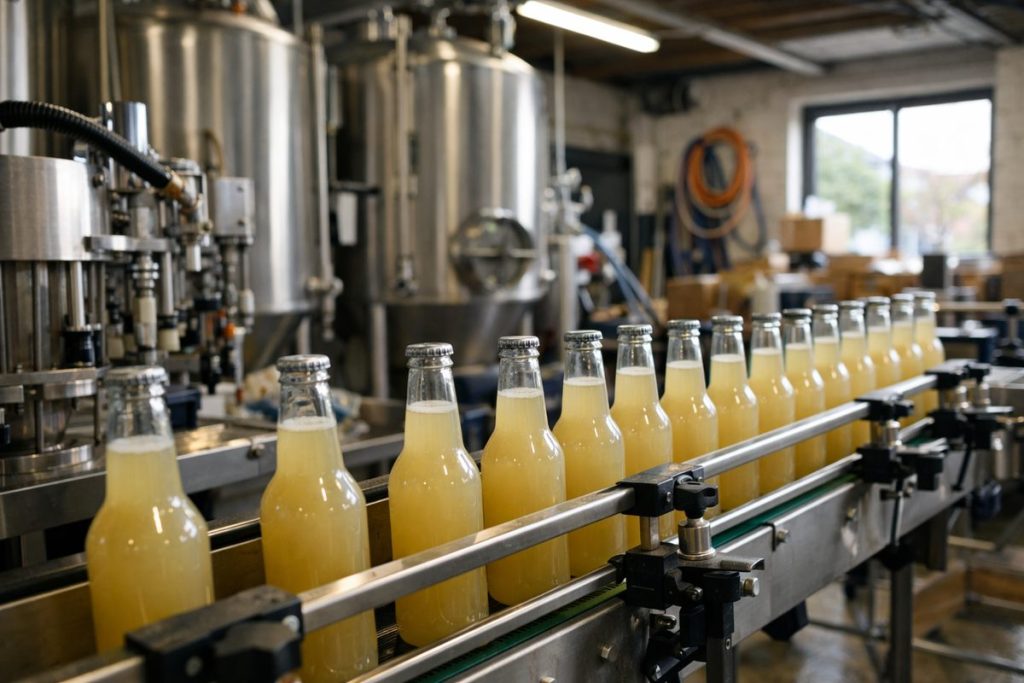
Short answer: If you already bottle beer or cider, you can make a zero-sugar still drink with almost no new equipment. You mix a concentrate with still water in a clean tank, bottle it on your existing line and sell it next to your other products. It gives you something to offer drivers, non-drinkers and families, and it keeps the bottling line busy when beer sales are slow.
Why still drinks fit a small brewery
Most small breweries have the same problem: sales go up and down with the seasons, and the taproom crowd is not only beer drinkers. Every group has a driver, someone who is not drinking tonight, or someone who simply wants something lighter.
A still drink is a flat, non-carbonated soft drink. Because it needs no carbonation, it is the simplest soft drink you can produce. You do not need a carbonation stone, a pressure-rated tank or a new filler. If your line can handle cider, it can handle a still drink.
There are three good reasons to try it:
- It uses what you have. Tanks, hoses, filler, capper and labeller are already there.
- It reaches new customers. Non-drinkers, drivers, schools, gyms and offices are markets that will never buy your IPA.
- It is low risk. A test batch costs very little, and you can stop at any time.
How it works in practice
A still drink concentrate is a ready-made flavour and sweetener blend. You only add water. The zero-sugar concentrates from Aromhuset in Sweden are mixed 1 part concentrate to 32 parts water, so a 500 ml bottle makes 16.5 litres of finished drink, a 2 litre bottle makes 66 litres and a 5 litre container makes 160 litres.
A typical first batch looks like this:
- Clean and sanitise a tank exactly as you would for beer. Soft drinks have no alcohol to protect them, so hygiene matters even more.
- Measure the water. Use filtered or good quality mains water. Chlorine taste comes through in a flat drink, so a carbon filter is worth it.
- Add the concentrate at 1 to 32 and stir gently until it is even. No heating is needed.
- Taste and adjust. Some customers prefer a slightly stronger mix. Write down what you do so every batch is the same.
- Bottle and cap on your normal line, then label and date-code the bottles.
Flavours that sell
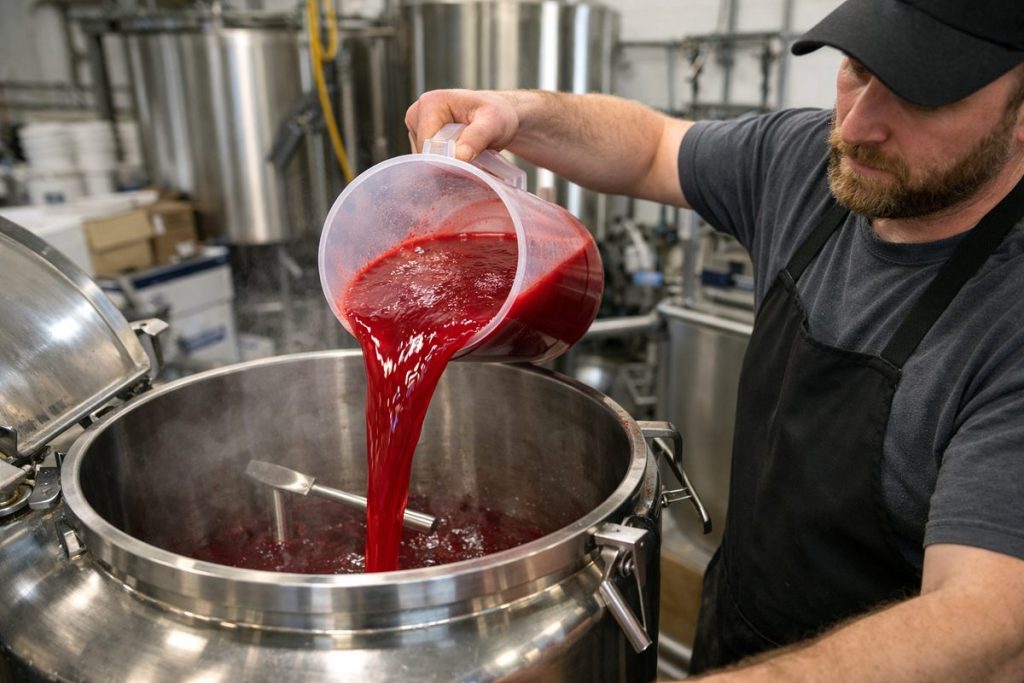
Start with two or three flavours rather than the whole range. Fresh, slightly sharp flavours work best as a still drink. Good starting points are grapefruit, blood orange, rhubarb and pineapple. Grapefruit with passion fruit and grapefruit with blood orange are popular blends, and you can make your own blends by mixing two concentrates.
A local twist helps. “Rhubarb still drink from the brewery on the high street” is a stronger product than a generic lemonade.
What about the sugar tax?
The UK Soft Drinks Industry Levy applies to drinks with added sugar of 5 grams or more per 100 ml. A drink sweetened only with sweeteners, such as sucralose, does not have added sugar, so it falls outside the levy. Small producers who make less than one million litres of liable drinks a year do not have to register for the levy either. Always check the current HMRC guidance for your own situation, but a zero-sugar drink keeps things simple.
Labelling and shelf life
A soft drink is a food, so normal UK food labelling rules apply. On the label you need, among other things, the name of the drink, an ingredients list, the net quantity, a best before date, storage instructions and your business name and address. A drink that contains sweeteners must also say “with sweetener(s)” next to the name. If you are new to soft drinks, ask your local authority food team. They are usually helpful, and you need to be registered as a food business with them anyway.
Shelf life depends on your hygiene, your bottles and how the drink is stored. Do a small storage test of your own before you put a date on the label, and keep bottles cool and out of direct sunlight.
What it costs
The calculation is simple. Take your net price for the concentrate, divide it by the number of litres it makes, and add the cost of the water, the bottle, the cap and the label. Because one 5 litre container makes 160 litres, the concentrate is usually a small part of the cost of each bottle. The bottle and label cost more than the drink inside.
Retailers and businesses can see the trade prices after registering in the shop for still drink concentrates. If you want to build a range under your own name, read our guide to private label drinks on Swedish concentrates.
Getting started
- Make a 10 to 20 litre test batch on a quiet day.
- Let staff and regulars taste it, and ask what they would pay.
- Put it in the taproom fridge first, then offer it to local shops, cafés and events.
- Order more when you know which flavours sell.
If you also run a café or taproom kitchen, see how other businesses make a house soda for a café or restaurant. And if you have not bought from a Swedish supplier before, we explain shipping, VAT and customs after Brexit.