Craft Drinks Production
Still drinks, zero-sugar sodas and flavoured drinks for small breweries, bottlers and craft producers in the UK.
Liqueur essences for bars, restaurants and licensed producers
Short answer: A liqueur essence is a concentrated flavouring that turns a neutral spirit, sugar and water into a liqueur. Bars and restaurants use them to make a house liqueur from spirits they have bought, and licensed producers use them to develop new products quickly. They come in sizes from 20 ml for testing up to 1 litre for regular use.
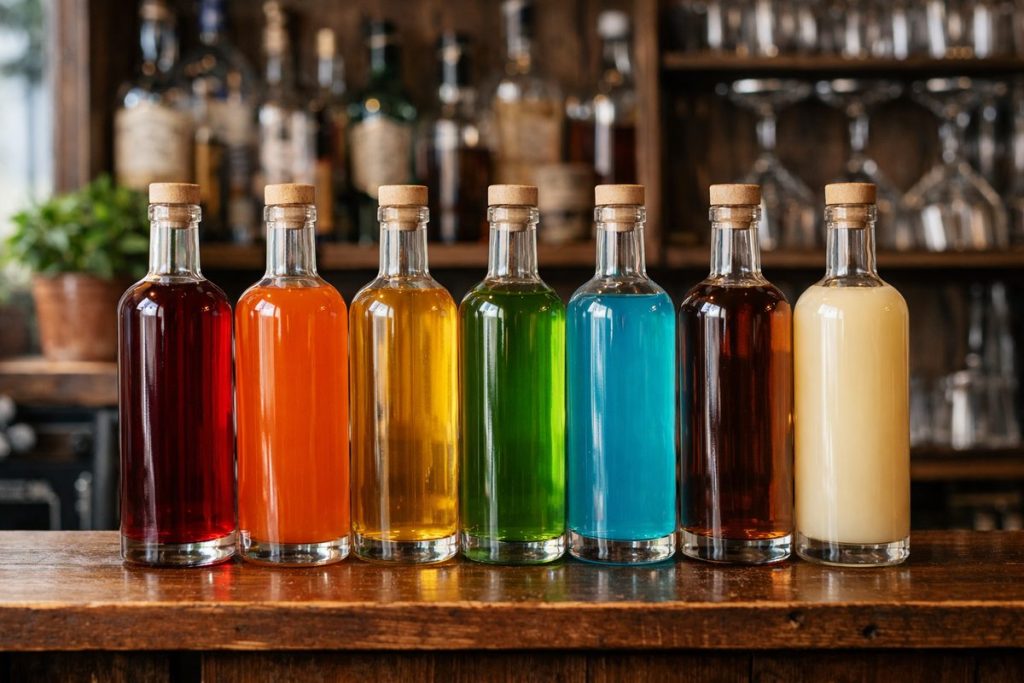
How a liqueur is made with essence
The basic recipe is simple:
- Start with a neutral spirit, such as vodka, bought with duty paid.
- Add sugar or syrup for sweetness and body.
- Add the essence according to the dosage on the bottle.
- Mix, let it rest and adjust to taste.
Coffee, chocolate, orange, cream and berry styles are classics. The same base can be used for several flavours, which makes a small range easy to manage.
Ideas for bars and restaurants
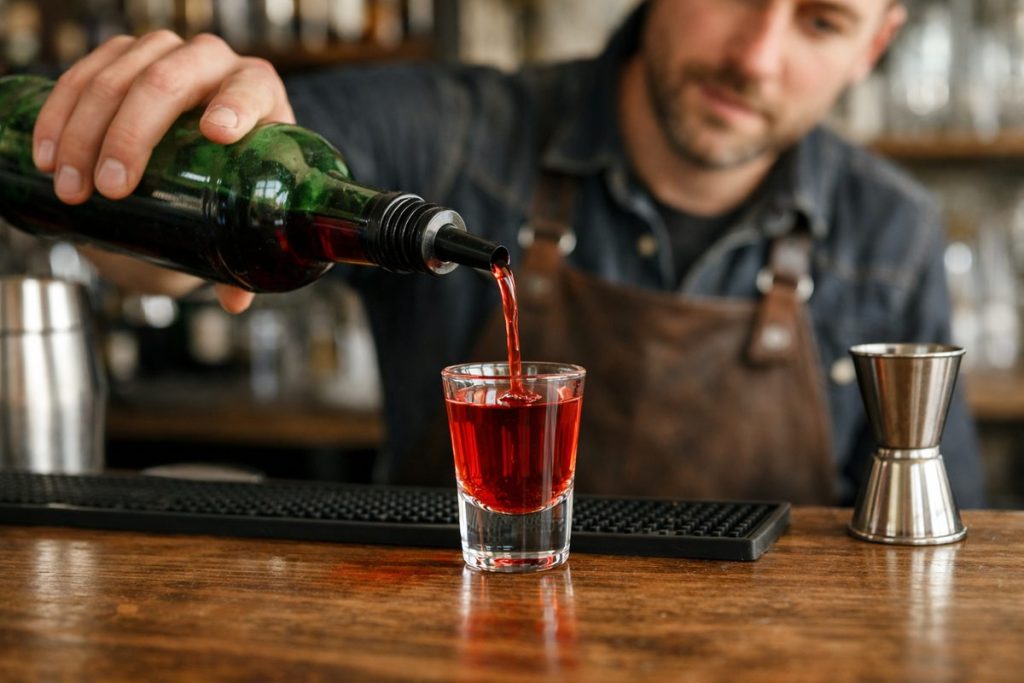
- A house liqueur served with dessert or coffee.
- A signature shot with a flavour that is yours.
- Cocktail bases that save time behind the bar.
- Seasonal specials for Christmas or summer.
Because you start from a spirit you already buy, the extra cost per serving is mainly the sugar and the essence.
The rules in short
You may flavour and mix drinks for your customers under your premises licence. Producing spirits drinks for sale in bottles is different: it requires approval from HMRC and the right labelling, so licensed producers use essences as part of their approved production. Distilling without a licence is illegal in the UK, also for personal use, and essences should never be marketed for that.
Choosing the size
Start with 20 or 50 ml bottles to test flavours, move to 280 ml or 1 litre for the flavours you use every week, and consider bulk only when you have steady volume. Read more about essences in 5 and 25 litres.
The full range of liqueur essences is in the trade shop. Homebrew retailers can read how essences fit into a range in stocking a homebrew shop.
Essences in 5 and 25 litres: when buying in bulk makes sense
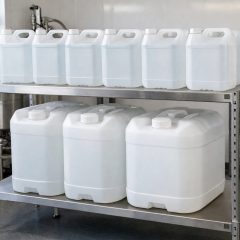
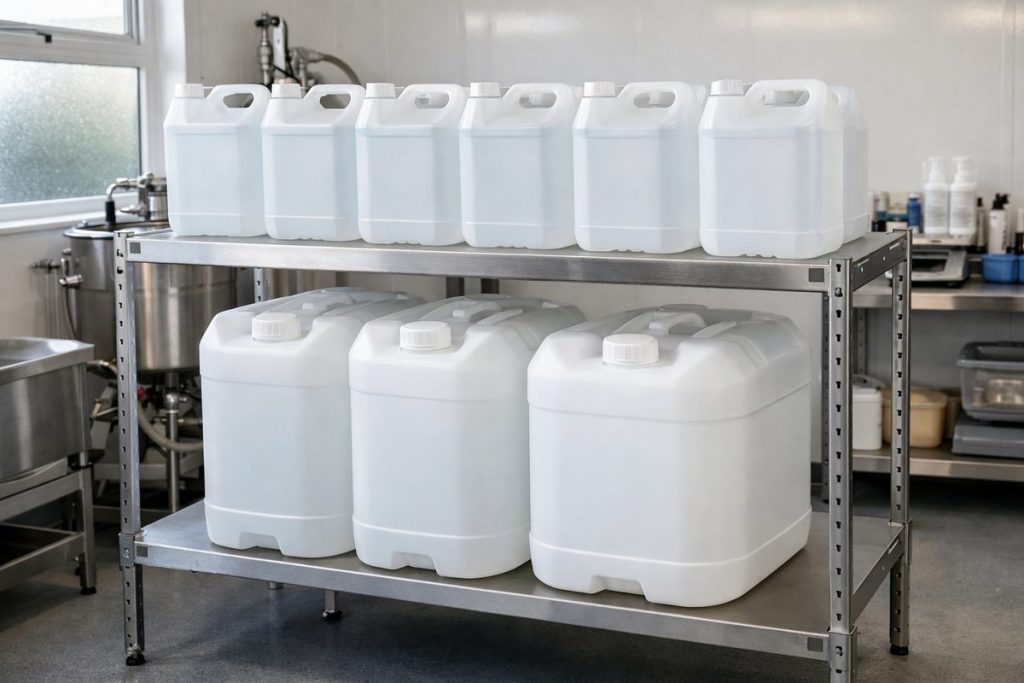
Short answer: Bulk essences in 5 and 25 litre containers are for businesses that use the same flavour week after week: licensed drinks producers, flavour houses, bars with their own house liqueurs, and retailers who repack under their own label. The price per millilitre drops sharply, but only if you will use the essence before its best before date and can store and handle it properly.
Who buys in bulk?
- Licensed spirits and liqueur producers who flavour a base spirit in batches.
- Soft drink and syrup makers who use the same flavour in every production run.
- Bars and restaurants with a house liqueur or flavoured drink on the menu.
- Retailers and webshops who repack essence into small bottles under their own brand. Read more about private label.
If you only use a few bottles a month, the 280 ml and 1 litre bottles are often the better choice.
The four questions to ask first
1. How much will you use before the best before date? Work out your monthly use and check that a 25 litre container will be used up in time. If not, the 5 litre size is safer.
2. Can you store it properly? Essences should be kept closed, cool and away from sunlight. A 25 litre container also weighs over 25 kg and needs space and a safe way to pour.
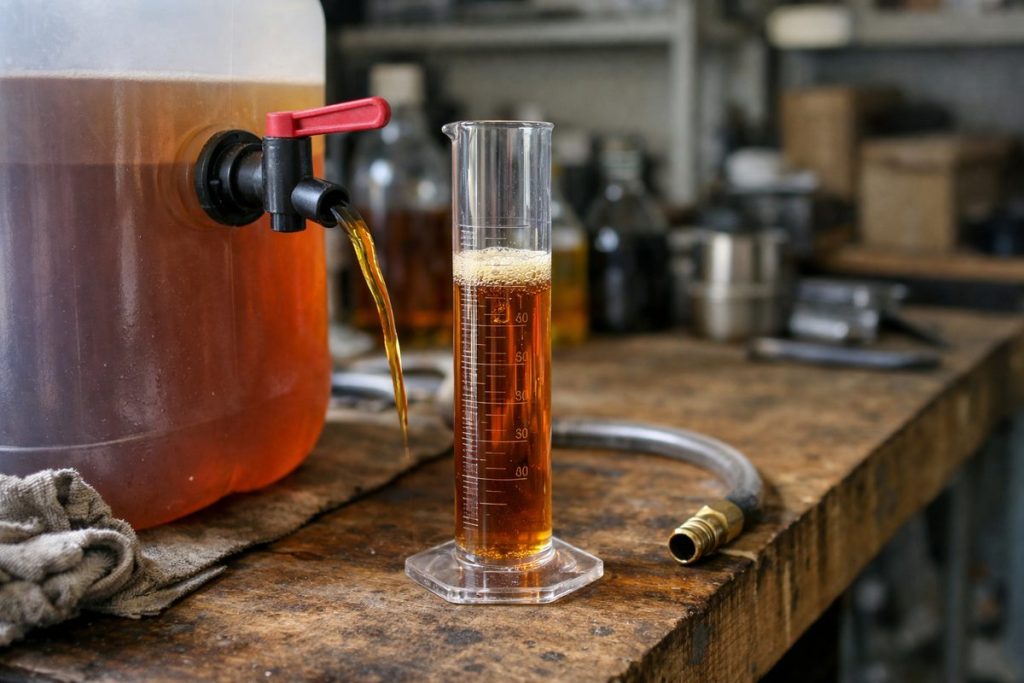
3. Can you dose accurately from a large container? You need a tap or a pump, clean measuring equipment and a routine for closing the container after use.
4. Will you repack it? If you fill small bottles, you become responsible for labelling and traceability. Keep batch numbers from the container on your own labels.
The cost
Compare the price per millilitre across sizes: small bottles, 1 litre, 5 litre and 25 litre. Then add the cost of pumps, bottles and labels if you repack. The calculation is the same as for any concentrate. We show it step by step in cost per bottle.
Stay on the right side of the rules
Essences are used to flavour drinks and foods. Spirits production in the UK requires approval from HMRC, so bulk spirit essences are for licensed producers or for flavouring spirits that have been bought with duty paid. Never describe them as a way to make spirits at home.
See essences in bulk 25 litres and essences in 5 litres. For how delivery and parcels work, read buying wholesale from Sweden.
Labelling a soft drink in the UK: what small producers must include
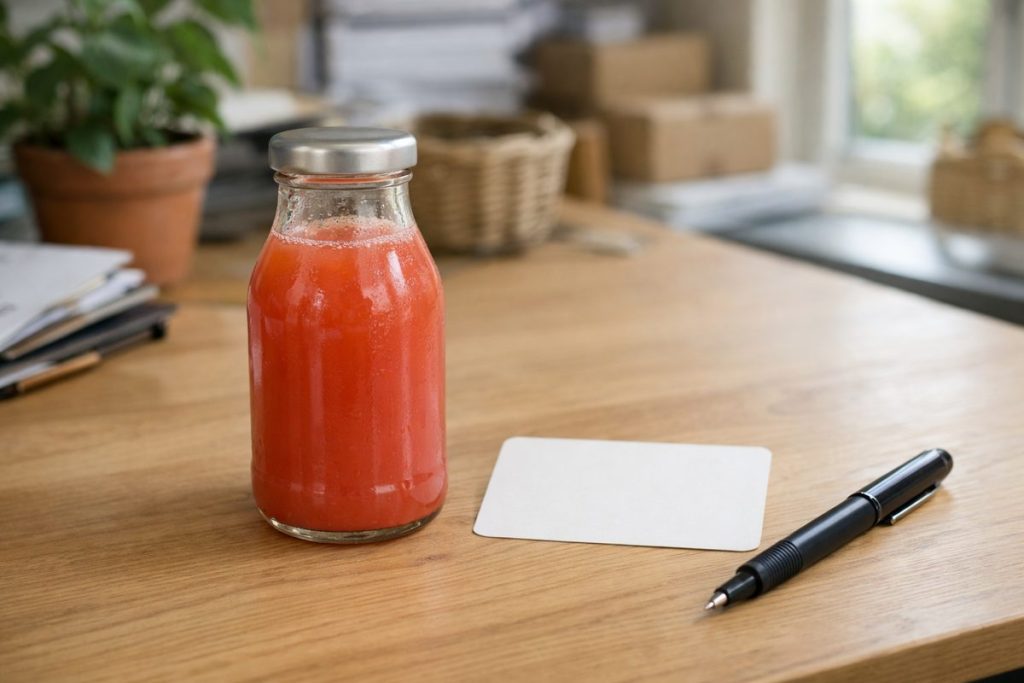
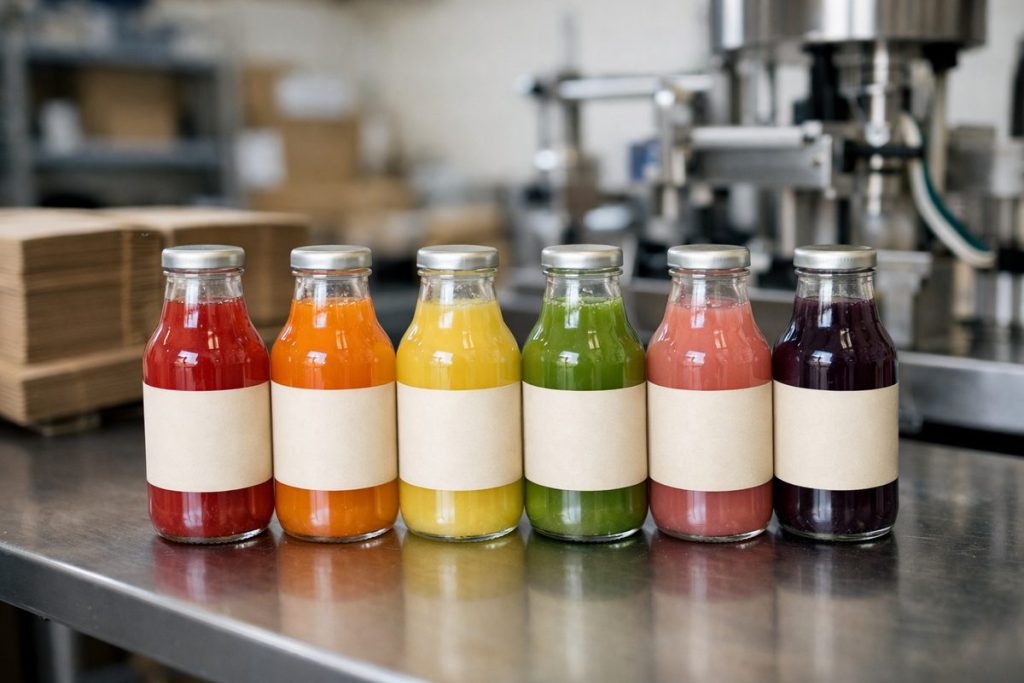
Short answer: A bottled soft drink sold in the UK must have a label with the name of the drink, the ingredients with allergens emphasised, the net quantity, a best before date, storage instructions where needed, and the name and UK address of the business. A drink with sweeteners must also say “with sweetener” or “with sweeteners” next to its name. Build the label from your supplier’s product specification, not from memory.
Why it matters
A wrong label is one of the most common problems for small food businesses. It can mean bottles taken off the shelf, a visit from trading standards, or worse, a customer with an allergy getting the wrong information. The good news is that a soft drink label is simple once you know what has to be on it.
This is a practical summary for small producers. Always check the current guidance from the Food Standards Agency or your local authority, especially if your drink is unusual.
The checklist
1. The name of the food. A name that tells the customer what it is, such as “Rhubarb still drink”. A brand name on its own is not enough.
2. The ingredients list. All ingredients in descending order of weight, starting with water. Take the ingredients of the concentrate from the supplier’s specification and include them in your list.
3. Allergens. Any of the 14 regulated allergens must be emphasised in the ingredients list, for example in bold. Many fruit drink concentrates contain none, but check the specification for every flavour.
4. The sweetener statement. If the drink contains a sweetener, such as sucralose, the words “with sweetener(s)” must appear with the name of the drink.
5. The net quantity. In millilitres or litres, for example 330 ml.
6. A best before date. Base it on your own storage test, not on a guess.
7. Storage conditions. For example “Store in a cool, dry place. Once opened, keep refrigerated and drink within 3 days.”
8. Your business name and UK address. The business responsible for the drink, which is you if your name is on the label.
9. Batch or lot number. So you can trace the bottle back to the day it was made.
Nutrition information
Most pre-packed foods must also have a nutrition declaration. Some very small producers who supply small quantities directly to consumers or local shops may be exempt. The rules are detailed, so check whether the exemption applies to you before you leave it out. For a sugar-free still drink the values are low, which can also be a selling point.
Claims on the label
“Sugar-free” and “no added sugars” are nutrition claims with legal conditions. They are normally fine for a drink sweetened only with sweeteners, but keep them accurate and do not add health claims, such as “good for your immune system”, unless they are authorised.
Make it look good too
Once the legal text is right, the rest of the label is yours. Many small producers do well with a clear flavour name, a local touch (“made in our farm kitchen”) and the words “sugar-free” visible from a distance.
Further reading
Start with bottling your own still drink, and work out the numbers with cost per bottle. If you plan a range under your own brand, read about private label drinks. Product specifications for the still drink concentrates are available to trade customers.
Cost per bottle: how to work out your margin on a still drink
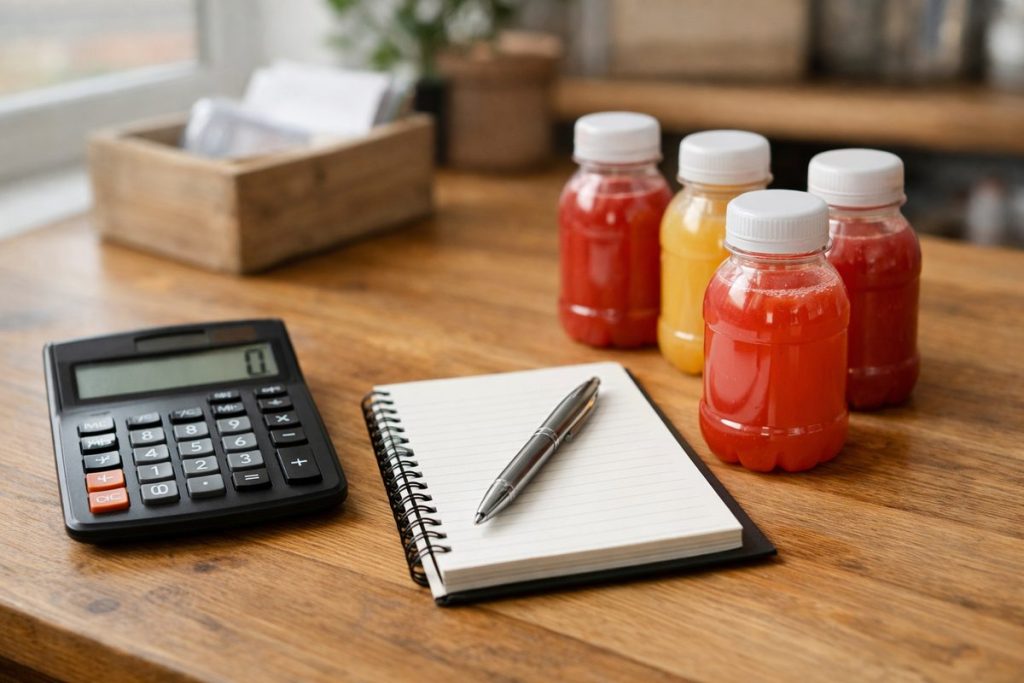
Short answer: Add up five things per bottle: concentrate, water, bottle, cap and label. Then add a share of your time and any delivery or marketplace fees. With a concentrate that is mixed 1 to 32, the drink itself is usually the cheapest part. The packaging is what you need to watch.
Step 1: the drink
Start with the concentrate. Take your net price for one bottle or container and divide it by the number of litres it makes:
- 500 ml of concentrate makes 16.5 litres
- 2 litres of concentrate makes 66 litres
- 5 litres of concentrate makes 160 litres
That gives you the cost per litre of finished drink. Multiply it by the size of your bottle. A 330 ml bottle uses a third of a litre, so it costs a third of the price per litre.
Water is almost free if you use mains water through a filter, but count the filter cartridges if you change them often.
Trade prices for the still drink concentrates are shown to registered businesses. The larger sizes give the lowest cost per litre.
Step 2: the packaging
Write down your price per unit for:
- the bottle (glass or PET)
- the cap
- the label, including printing
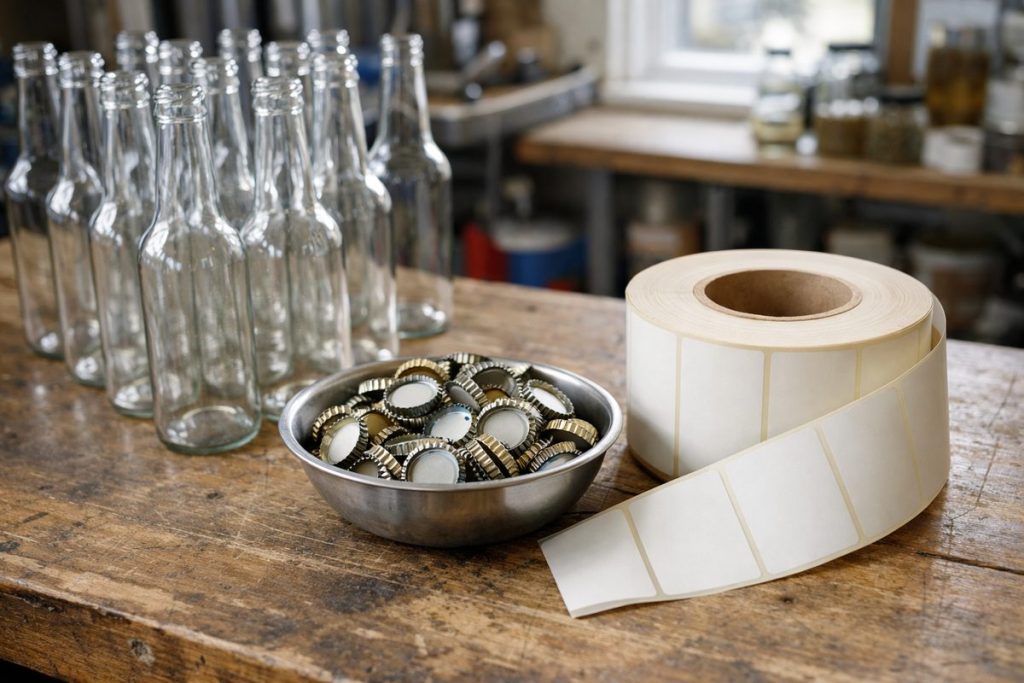
For most small producers these three together cost more than the drink inside. Buying bottles by the pallet from a packaging wholesaler brings the price down, but ties up space and cash. Some producers start with PET and move to glass when sales are steady.
Step 3: your time
Time how long it takes to make one batch, from cleaning to the last label, and divide by the number of bottles. Even if you do not pay yourself yet, count it. It shows you how much you gain by making larger batches.
Step 4: selling costs
Add the costs of getting the bottle to the customer:
- delivery to shops, or postage for online orders
- marketplace or card fees
- the shop’s margin if you sell through retailers
A shop usually wants to make its own margin on top of your price, so your trade price has to leave room for that.
An example to fill in
| Per 330 ml bottle | |
|---|---|
| Concentrate | your net price ÷ litres × 0.33 |
| Water and filter | a fraction of a penny |
| Bottle | your price |
| Cap | your price |
| Label | your price |
| Time | your hourly cost ÷ bottles per hour |
| Total cost | the sum |
When you know your total cost, compare it with what similar drinks sell for in your area. Price by what customers will pay, not by what the drink costs you.
Ways to improve the margin
- Make larger batches to spread cleaning and setup time.
- Buy concentrate in larger sizes once you know which flavours sell.
- Sell some of the volume yourself, in your own shop, taproom or market stall, where you keep the full price.
- Offer a larger bottle or a jug size for cafés, where the packaging cost per litre is lower.
Next steps
If you are new to soft drinks, start with our guide to bottling your own still drink or, if you have a bottling line, zero-sugar still drinks for small breweries. If you want to sell under your own brand, read about private label drinks.
Bottling your own still drink: a guide for farm shops, juice producers and small food businesses
Short answer: You do not need a brewery to bottle a soft drink. A farm shop, an apple presser, a jam maker or a small café kitchen can make a sugar-free still drink with a clean mixing vessel, a hand filler and a capper. The concentrate is mixed 1 part to 32 parts water, so the drink is cheap to make, and it gives you a bottled product to sell all year round.
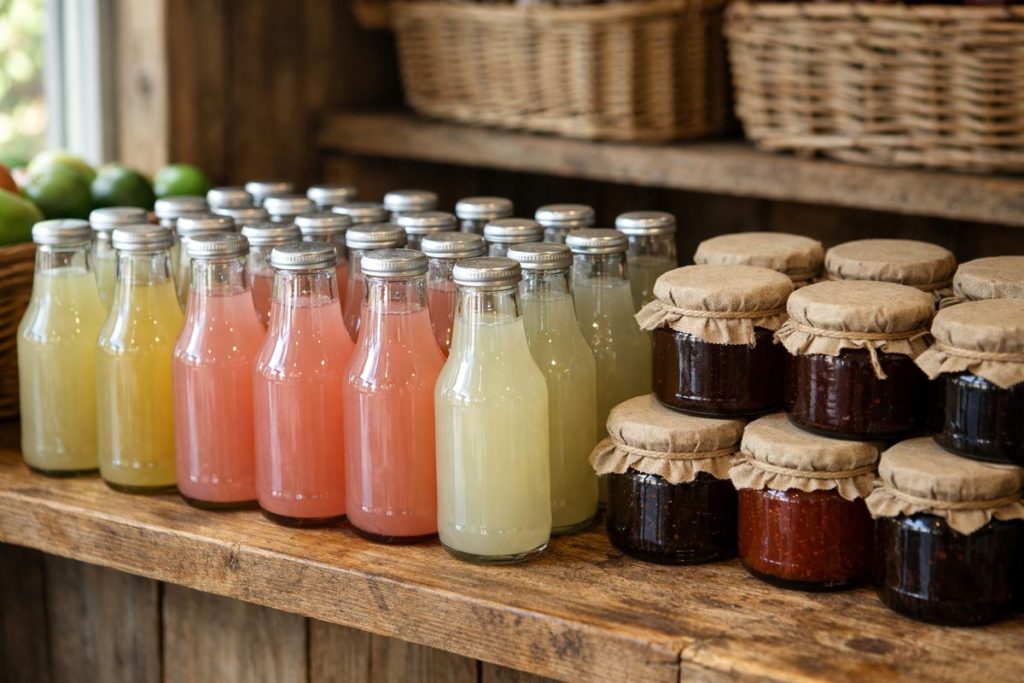
Who this suits
Still drinks fit almost any business that already sells food or drink and has a little kitchen or production space:
- Farm shops that want a local drink next to their own produce
- Apple and juice pressers who have bottles, caps and a pasteuriser, and quiet months between harvests
- Jam, chutney and sauce makers who already label and sell through shops and markets
- Market traders and caterers who want a drink to sell with their food
- Cafés and delis that want a bottled house drink to sell in the fridge
What they have in common is that they already have customers. A drink is an easy extra item in a basket that is already being filled.
The equipment you need
For small batches you need surprisingly little:
- a food-grade mixing vessel with a tap, 20 to 60 litres
- a measuring jug and scales
- a water filter if your tap water tastes of chlorine
- a simple gravity or hand filler
- a capper for your chosen caps
- bottles, caps and labels
If you already press juice, you probably have most of this. If you want a longer shelf life, a pasteuriser of the kind used for juice can be used for still drinks too.
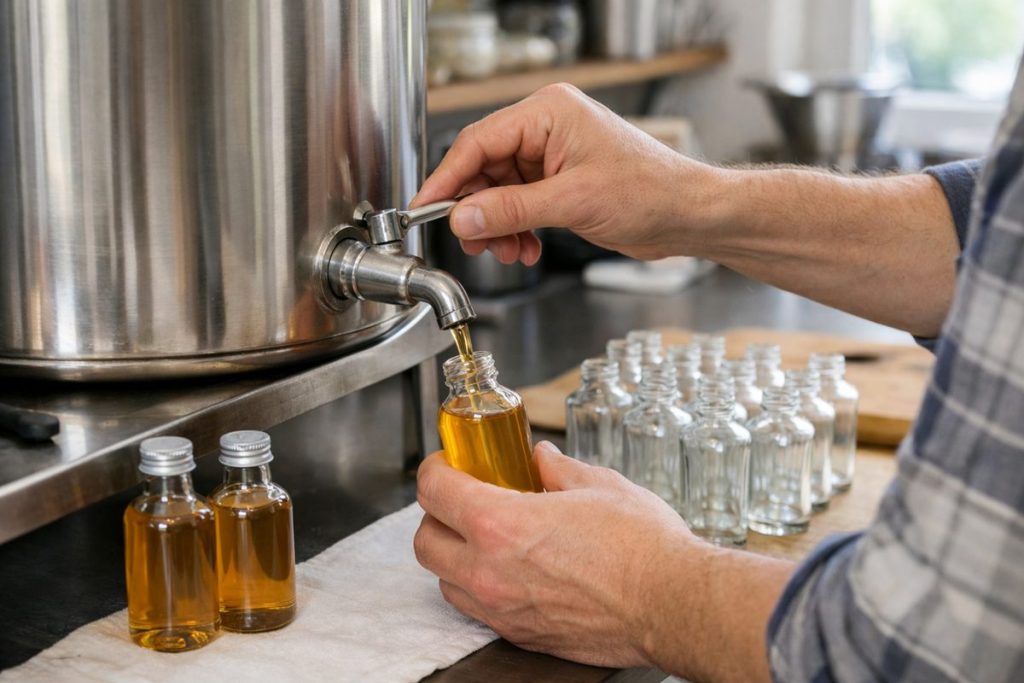
A simple production day
- Clean and sanitise everything that will touch the drink.
- Measure the water and add the concentrate at 1 to 32. A 2 litre bottle of concentrate makes 66 litres of drink.
- Stir gently until even, and taste a sample.
- Fill, cap and label the bottles straight away.
- Write down the date, the batch, the flavour and how much you made.
Clean as you go and keep the mixed drink cool. A soft drink has no alcohol to protect it, so hygiene decides how long it keeps. Test your own shelf life with a few bottles stored for several weeks before you decide on a best before date.
Which flavours to start with
Choose flavours that fit what you already sell. A farm shop with a rhubarb patch could start with rhubarb. A shop that sells strawberries in summer could sell a strawberry still drink next to them. Grapefruit, blood orange and pineapple are good all-year flavours, and a blend such as grapefruit with passion fruit gives you something few others have. See the full range of still drink concentrates.
The rules
Making and selling drinks makes you a food business. Register with your local authority, keep a simple food safety plan for the steps you carry out, and label the bottles correctly. The label needs, among other things, the name of the drink, the ingredients, the net quantity, a best before date, your business name and address and, because the drink contains sweeteners, the words “with sweetener(s)”. Because the drink is sweetened without sugar, the Soft Drinks Industry Levy does not apply to it.
Is it worth it?
Work out the full cost per bottle before you set a price. The concentrate is usually a small part of it; the bottle, cap and label cost more. If you plan to sell under your own brand, read about private label drinks. Breweries and cideries with a bottling line can read our guide to zero-sugar still drinks for small breweries and bottlers.
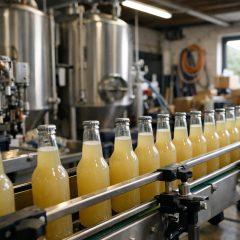
Zero-sugar still drinks: an extra product line for small breweries and bottlers
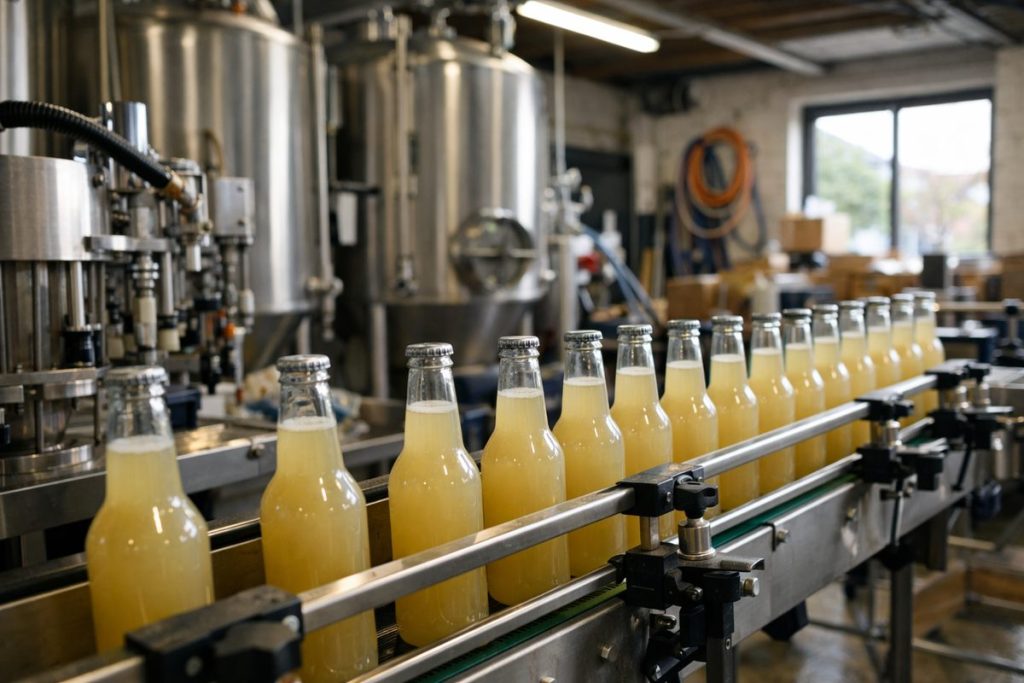
Short answer: If you already bottle beer or cider, you can make a zero-sugar still drink with almost no new equipment. You mix a concentrate with still water in a clean tank, bottle it on your existing line and sell it next to your other products. It gives you something to offer drivers, non-drinkers and families, and it keeps the bottling line busy when beer sales are slow.
Why still drinks fit a small brewery
Most small breweries have the same problem: sales go up and down with the seasons, and the taproom crowd is not only beer drinkers. Every group has a driver, someone who is not drinking tonight, or someone who simply wants something lighter.
A still drink is a flat, non-carbonated soft drink. Because it needs no carbonation, it is the simplest soft drink you can produce. You do not need a carbonation stone, a pressure-rated tank or a new filler. If your line can handle cider, it can handle a still drink.
There are three good reasons to try it:
- It uses what you have. Tanks, hoses, filler, capper and labeller are already there.
- It reaches new customers. Non-drinkers, drivers, schools, gyms and offices are markets that will never buy your IPA.
- It is low risk. A test batch costs very little, and you can stop at any time.
How it works in practice
A still drink concentrate is a ready-made flavour and sweetener blend. You only add water. The zero-sugar concentrates from Aromhuset in Sweden are mixed 1 part concentrate to 32 parts water, so a 500 ml bottle makes 16.5 litres of finished drink, a 2 litre bottle makes 66 litres and a 5 litre container makes 160 litres.
A typical first batch looks like this:
- Clean and sanitise a tank exactly as you would for beer. Soft drinks have no alcohol to protect them, so hygiene matters even more.
- Measure the water. Use filtered or good quality mains water. Chlorine taste comes through in a flat drink, so a carbon filter is worth it.
- Add the concentrate at 1 to 32 and stir gently until it is even. No heating is needed.
- Taste and adjust. Some customers prefer a slightly stronger mix. Write down what you do so every batch is the same.
- Bottle and cap on your normal line, then label and date-code the bottles.
Flavours that sell
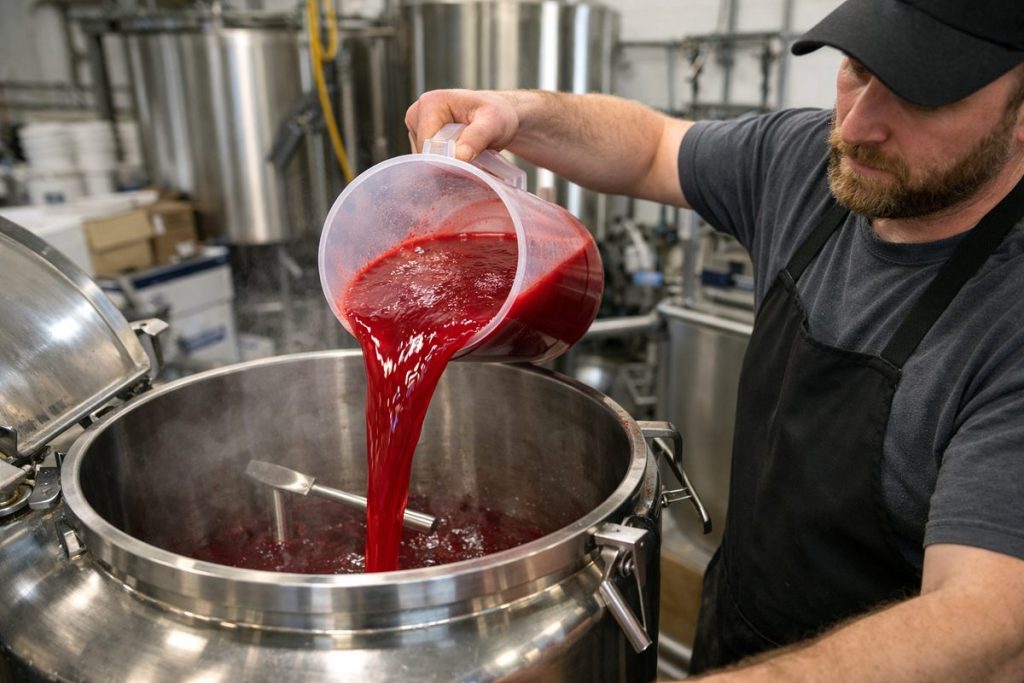
Start with two or three flavours rather than the whole range. Fresh, slightly sharp flavours work best as a still drink. Good starting points are grapefruit, blood orange, rhubarb and pineapple. Grapefruit with passion fruit and grapefruit with blood orange are popular blends, and you can make your own blends by mixing two concentrates.
A local twist helps. “Rhubarb still drink from the brewery on the high street” is a stronger product than a generic lemonade.
What about the sugar tax?
The UK Soft Drinks Industry Levy applies to drinks with added sugar of 5 grams or more per 100 ml. A drink sweetened only with sweeteners, such as sucralose, does not have added sugar, so it falls outside the levy. Small producers who make less than one million litres of liable drinks a year do not have to register for the levy either. Always check the current HMRC guidance for your own situation, but a zero-sugar drink keeps things simple.
Labelling and shelf life
A soft drink is a food, so normal UK food labelling rules apply. On the label you need, among other things, the name of the drink, an ingredients list, the net quantity, a best before date, storage instructions and your business name and address. A drink that contains sweeteners must also say “with sweetener(s)” next to the name. If you are new to soft drinks, ask your local authority food team. They are usually helpful, and you need to be registered as a food business with them anyway.
Shelf life depends on your hygiene, your bottles and how the drink is stored. Do a small storage test of your own before you put a date on the label, and keep bottles cool and out of direct sunlight.
What it costs
The calculation is simple. Take your net price for the concentrate, divide it by the number of litres it makes, and add the cost of the water, the bottle, the cap and the label. Because one 5 litre container makes 160 litres, the concentrate is usually a small part of the cost of each bottle. The bottle and label cost more than the drink inside.
Retailers and businesses can see the trade prices after registering in the shop for still drink concentrates. If you want to build a range under your own name, read our guide to private label drinks on Swedish concentrates.
Getting started
- Make a 10 to 20 litre test batch on a quiet day.
- Let staff and regulars taste it, and ask what they would pay.
- Put it in the taproom fridge first, then offer it to local shops, cafés and events.
- Order more when you know which flavours sell.
If you also run a café or taproom kitchen, see how other businesses make a house soda for a café or restaurant. And if you have not bought from a Swedish supplier before, we explain shipping, VAT and customs after Brexit.