Short answer: Slush is one of the most profitable drinks a café, lunch restaurant or food stall can sell. A machine, a concentrate and water are all you need. A concentrate mixed 1+5 gives a classic sweet slush, while a sugar-free concentrate mixed 1+17 gives a lighter slush that goes much further per bottle. Work out your cost per cup, pick a few flavours and put the machine where customers can see it.
Why slush works so well
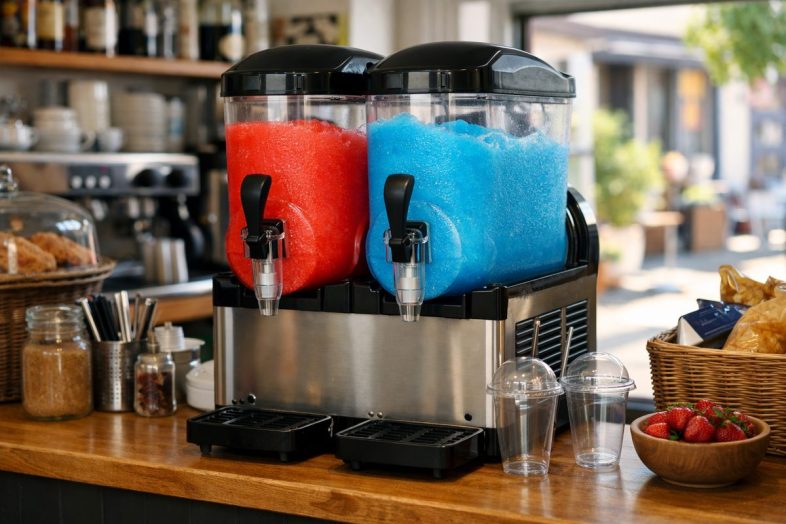
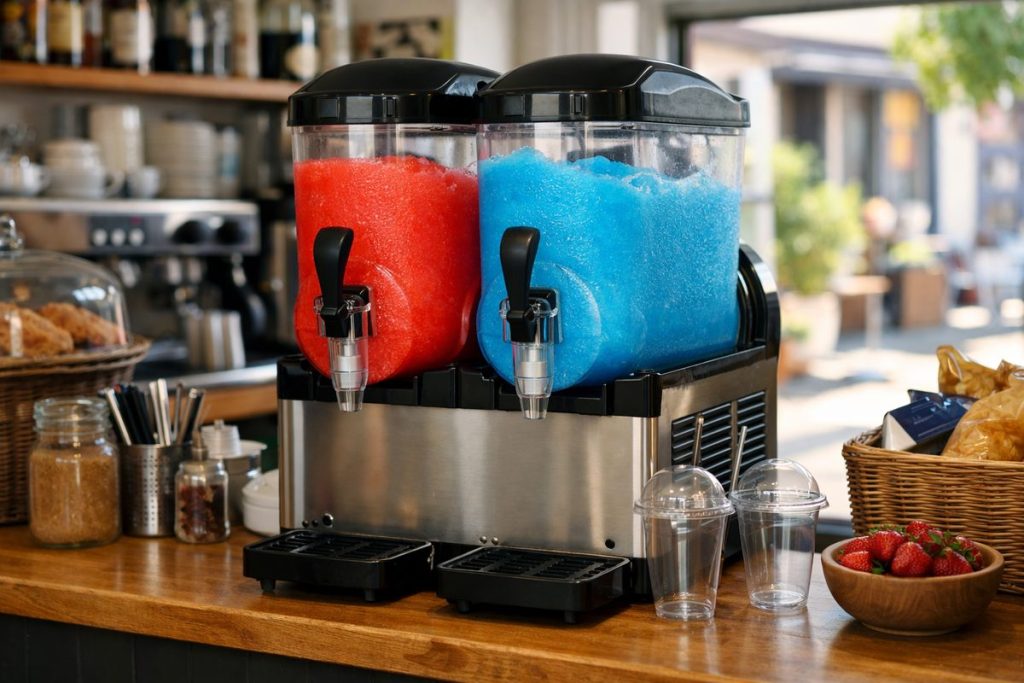
Slush sells on sight. A machine with bright colours turning on the counter does its own marketing, especially on warm days and wherever there are children, students or queues. It suits:
- cafés and sandwich bars with families as customers
- lunch restaurants near schools, colleges and offices
- kiosks, food trucks and market stalls
- leisure centres, campsites, cinemas and play centres
- events and festivals
Because the drink is mostly water and ice, the cost per cup is low and the margin is high.
1+5 or sugar-free 1+17?
There are two main types of concentrate in the slush range:
- Slush concentrate 1+5. One part concentrate to five parts water. This is the classic sweet slush most customers know. It comes in 500 ml and 5 litre bottles.
- Sugar-free slush 1+17. One part concentrate to seventeen parts water, sweetened without sugar. A 500 ml bottle makes 9 litres of slush and a 2 litre bottle makes 36 litres. See the sugar-free slush concentrates.
Many businesses offer one of each: a classic flavour for the traditional slush lover, and a sugar-free option for parents and adults who want something lighter.
How to mix
- Read the machine manual. Most machines have a minimum and maximum level for each bowl.
- Mix concentrate and cold water in the right ratio in a clean jug or bucket. Using cold water shortens the freezing time.
- Pour the mix into the bowl and switch on the freezing and stirring.
- Wait until the slush has the right texture. The first batch of the day takes the longest.
- Top up with ready-mixed liquid during the day, never with plain water or plain concentrate.
Always follow the ratio. Too little concentrate gives a slush that freezes into hard ice. Too much gives a slush that never freezes properly.
Glycerol and children: follow the FSA advice
Many slush drinks contain glycerol, which keeps the drink soft instead of freezing solid. The UK Food Standards Agency advises that slush drinks containing glycerol should not be sold to children under 4, and that children aged 4 to 10 should have no more than one a day. Check the specification of the concentrate you use, follow the current FSA guidance and put a clear sign by the machine if it applies to your drink. It shows parents that you take it seriously.
What a cup costs
Work it out like this:
- Find your net price per bottle of concentrate.
- Divide it by the litres of slush it makes. A 1+5 mix gives 6 litres of slush per litre of concentrate. A 1+17 mix gives 18 litres.
- Divide by the number of cups per litre. A 300 ml cup gives just over three cups per litre.
- Add the cup, lid and straw.
The cup and lid often cost as much as the slush inside. That is why slush has such a good margin even at a modest price.
Getting the most out of the machine
- Place it in sight. By the entrance or the till, not hidden behind the counter.
- Two flavours are enough to start. One red and one blue is the classic choice.
- Offer a combo. A slush with a lunch deal or a kids’ meal sells more cups.
- Clean it properly. Follow the manufacturer’s cleaning schedule. A clean machine is part of your food hygiene routine.
Slush fits well next to other house drinks. Read how to make a house soda for a café or restaurant, or how a small producer can bottle zero-sugar still drinks for sale.