Cafés & Restaurants
Slush, house sodas, sparkling water flavours and coffee flavours for cafés, lunch restaurants and food stalls.
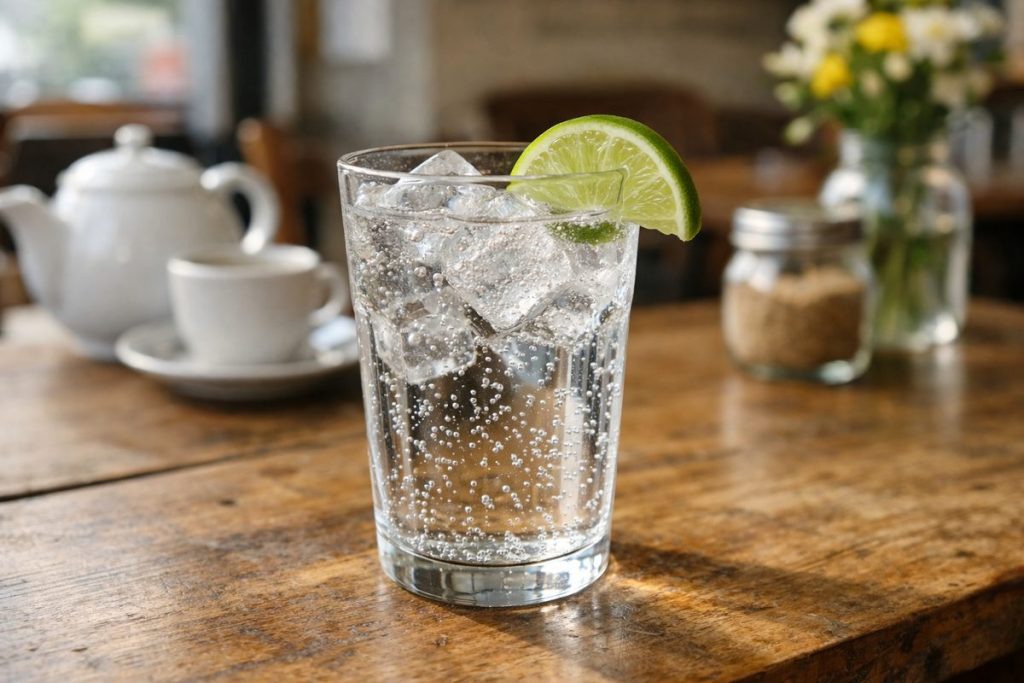
Sparkling water flavours: an easy upsell for cafés, offices and gyms
Short answer: Sparkling water flavour is a concentrated flavouring you add to plain sparkling water. A small bottle of 32 to 50 ml flavours 16 to 25 litres, and a 100 or 200 ml bottle flavours 50 to 100 litres. It turns tap water from a carbonator into a drink you can sell or offer, at a cost of very little per glass.
Why it works
Many customers want something lighter than a soft drink but more interesting than plain water. Flavoured sparkling water fills that gap. It suits:
- Cafés and restaurants that already have a sparkling water tap or chiller
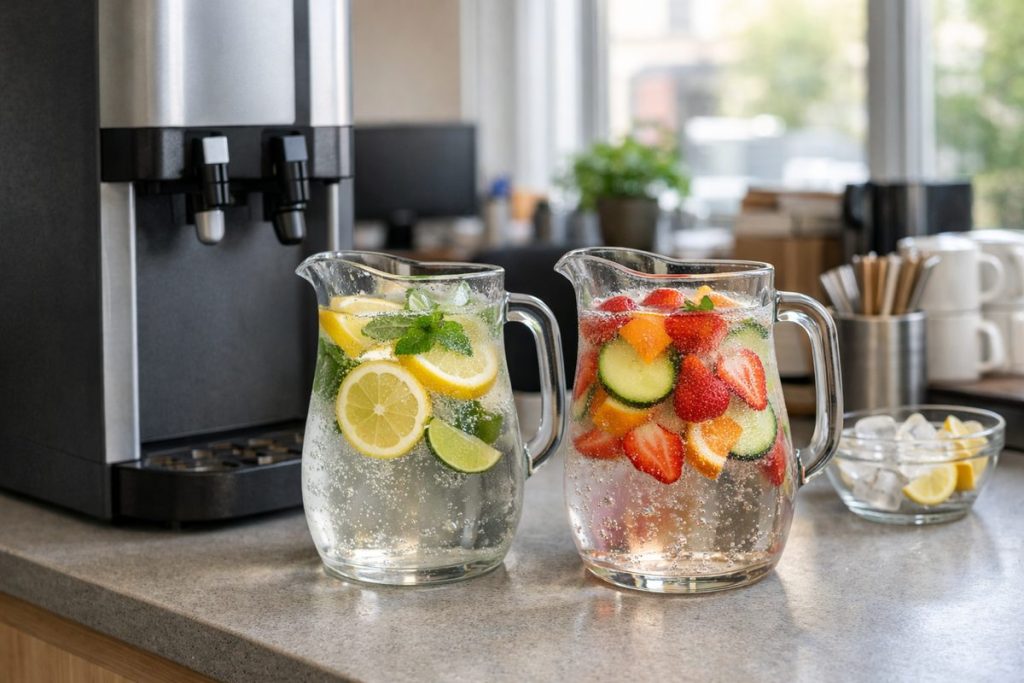
- Offices with a water dispenser or soda machine in the kitchen
- Gyms, spas and leisure centres that sell drinks at reception
- Hotels and B&Bs that want a welcome drink with a difference
If you already have a carbonator, the only new cost is the flavour.
How to use it
- Fill a jug, bottle or glass with cold sparkling water.
- Add the flavour according to the dosage on the bottle. A few drops per glass, or a measured amount per litre.
- Stir gently, so you keep the bubbles.
Mix by the jug for service, or let customers flavour their own glass at a self-service station. Write the dose on a card next to the machine so every jug tastes the same.
Selling it
- On the menu: “House sparkling water, flavoured” as a cheaper alternative to soft drinks.
- As a refill: a flavoured refill for customers with their own bottle.
- In meal deals: an option that costs you less than a can.
- In shops and webshops: small bottles sell well next to soda machines and reusable bottles. Read more about selling drink concentrates in a shop or webshop.
Know what is in it
Keep the product specification to hand so staff can answer questions about ingredients and allergens. If the flavour contains a sweetener, say so on the menu or the dispenser.
See the range of sparkling water flavours in the trade shop. If you want a fuller drink with sweetness and body, read how to make a house soda for a café or restaurant.
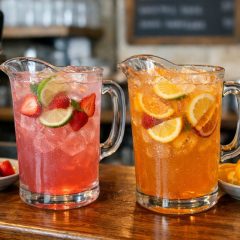
How to make your own house soda for a café or restaurant
Short answer: A house soda is a soft drink you mix yourself from a concentrate and water, either still or carbonated, and serve from a jug, a dispenser or a tap. It costs far less per glass than branded cans, it takes up less fridge space, and it gives your menu something customers cannot get anywhere else.
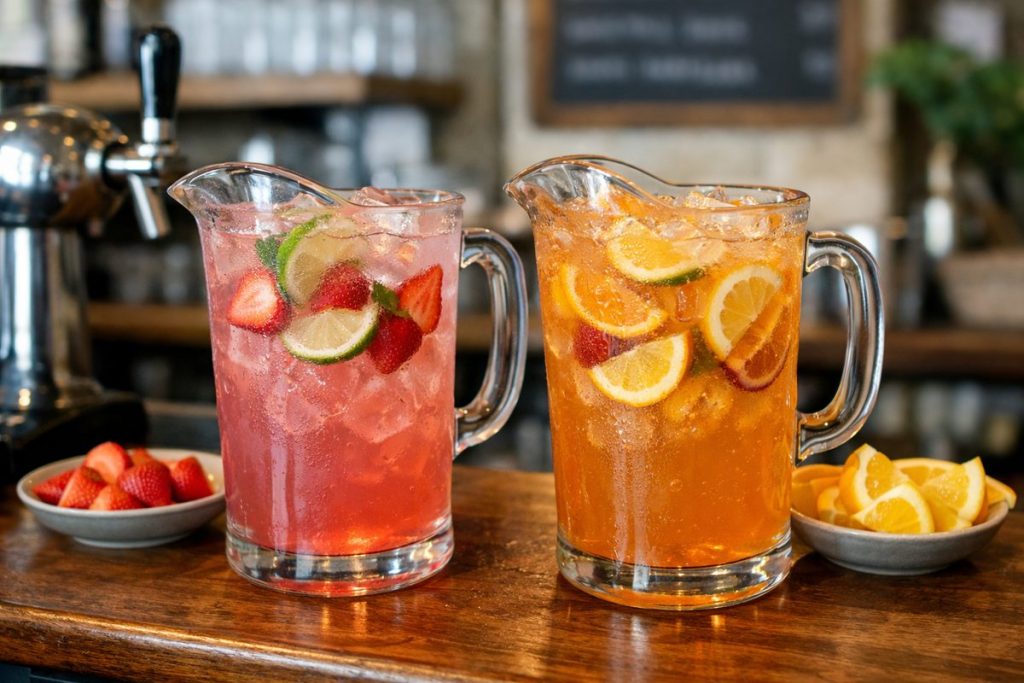
Why make your own?
Branded soft drinks are easy, but they are expensive per glass and they look the same in every café. A house soda gives you:
- A better margin. Concentrate and water cost much less per glass than a can.
- Less waste. No cases of cans to store, chill and recycle.
- A drink with your name on it. “Our rhubarb lemonade” is easier to remember than another cola.
- Flexibility. You can offer sugar-free versions, seasonal flavours and refills.
Still or sparkling?
Still house drinks are the easiest. Mix a still drink concentrate with cold water in a jug or a drinks dispenser and serve with ice. Zero-sugar still drink concentrates are mixed 1 part to 32 parts water, so one 500 ml bottle makes 16.5 litres. That is more than fifty large glasses. See the still drink concentrates.
Sparkling house sodas need carbonated water. There are three common ways to get it:
- A carbonated water tap or chiller, the kind many restaurants already have for water.
- A soda machine or siphon for small volumes.
- A keg and CO2 if you already serve draught drinks.
Add the soda concentrate to the sparkling water, or mix it in a keg and carbonate the finished drink. The zero soda concentrates are made for exactly this. Follow the ratio on the label so every glass tastes the same.
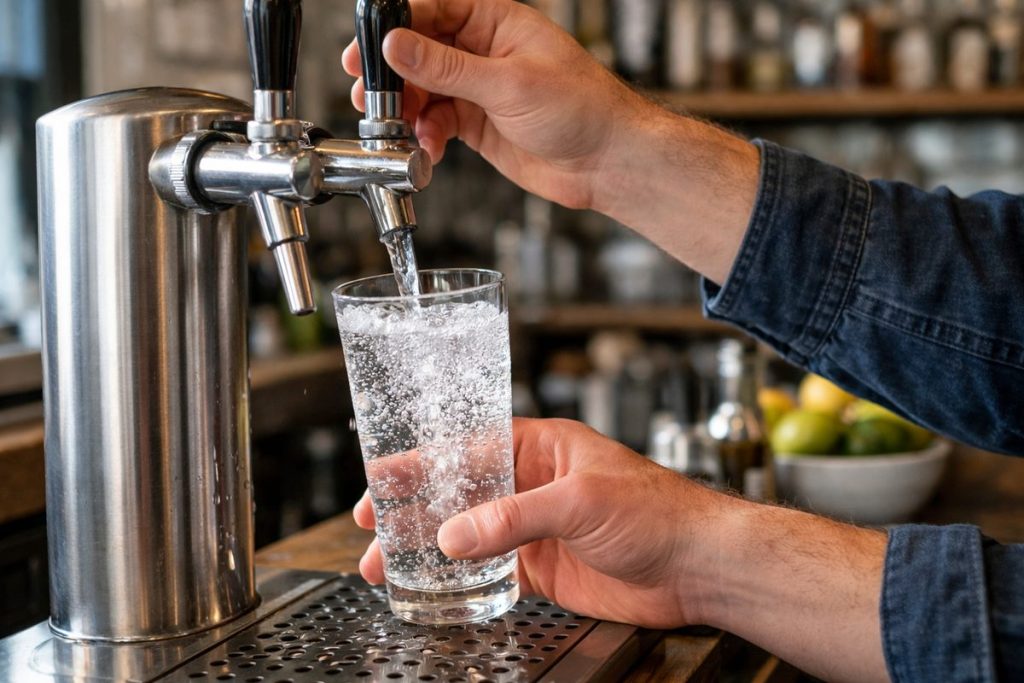
Flavoured sparkling water: the simplest option
If a full soda feels like too much, start with flavoured sparkling water. A few millilitres of a sparkling water flavour in a litre of sparkling water gives a light, unsweetened or lightly flavoured drink. Small bottles of 32 to 50 ml make 16 to 25 litres, and 100 to 200 ml bottles make 50 to 100 litres. See the sparkling water flavours.
Serving and hygiene
- Mix in small batches. Mix what you will sell in a day or a service and keep it chilled.
- Label your jugs and dispensers with the flavour and the time they were mixed.
- Clean dispensers and taps daily as part of your normal food hygiene routine.
- Know your allergens. Keep the product specifications to hand so staff can answer questions about ingredients and sweeteners.
Pricing
Work out your cost per glass: the net price of the concentrate divided by the number of glasses it makes, plus ice, a straw and a slice of fruit if you use one. Then price the drink the way you would price a coffee, by what customers expect to pay in your area, not by what it costs. Many cafés charge the same for a house soda as for a branded soft drink and keep the difference.
Ideas that sell
- A sugar-free lunch deal drink included in a meal offer.
- A jug for the table for groups and families.
- Seasonal flavours, such as rhubarb in spring and berries in summer.
- A “mocktail” menu with house sodas, fruit and herbs for customers who do not drink alcohol.
If you also want an ice-cold option for summer, read our guide to slush for cafés and lunch restaurants. Producers who want to bottle the drink for sale can read about zero-sugar still drinks for small breweries and bottlers.
Slush for cafés and lunch restaurants: machines, mixing and margins
Short answer: Slush is one of the most profitable drinks a café, lunch restaurant or food stall can sell. A machine, a concentrate and water are all you need. A concentrate mixed 1+5 gives a classic sweet slush, while a sugar-free concentrate mixed 1+17 gives a lighter slush that goes much further per bottle. Work out your cost per cup, pick a few flavours and put the machine where customers can see it.
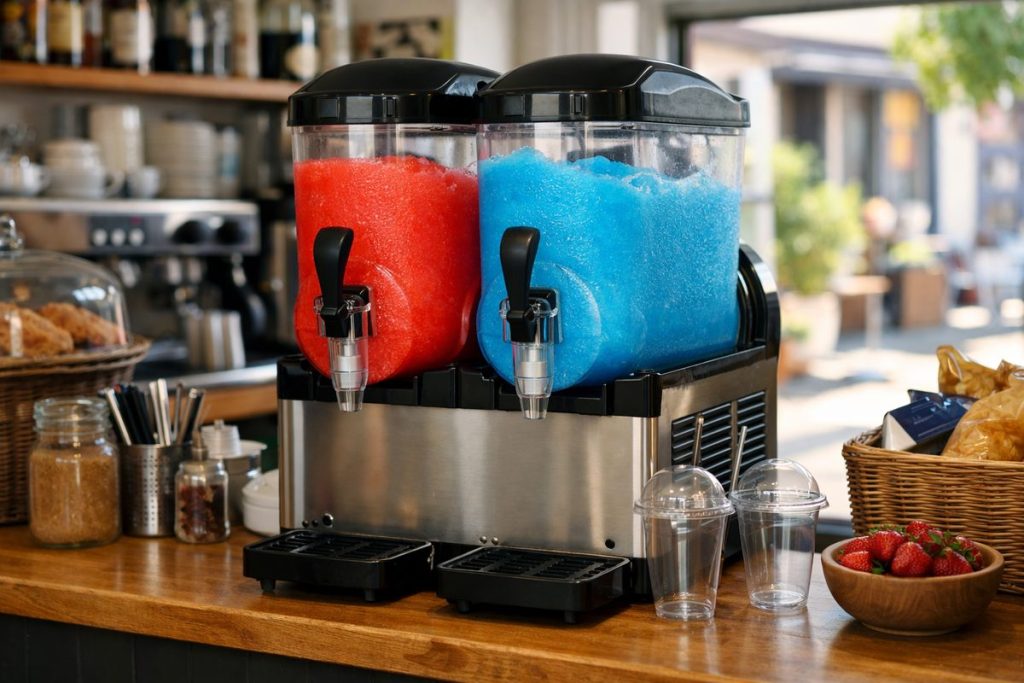
Why slush works so well
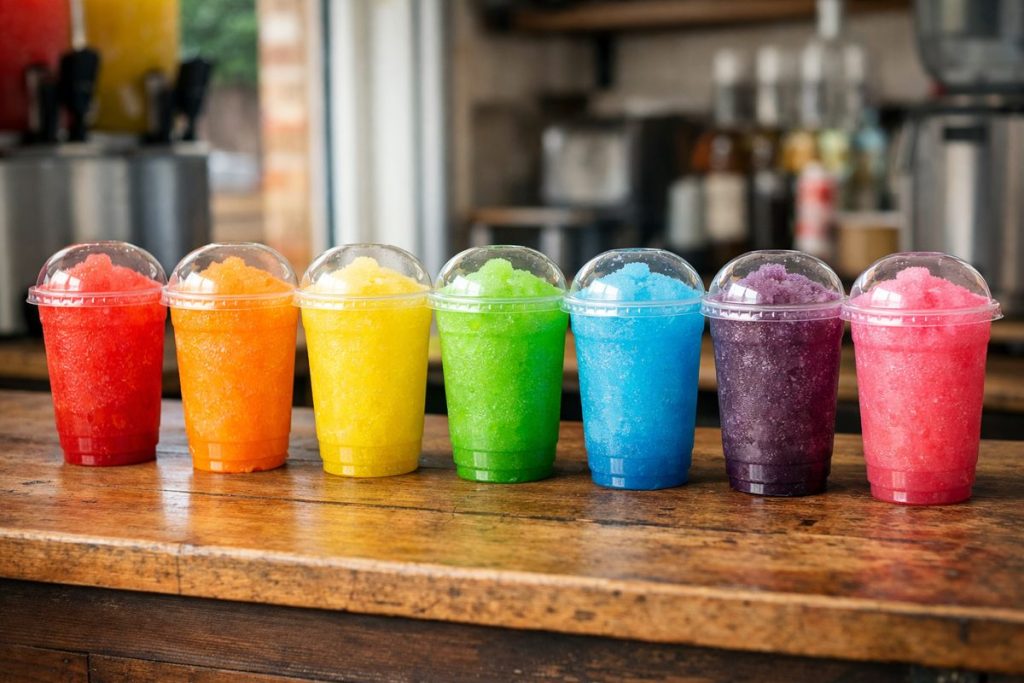
Slush sells on sight. A machine with bright colours turning on the counter does its own marketing, especially on warm days and wherever there are children, students or queues. It suits:
- cafés and sandwich bars with families as customers
- lunch restaurants near schools, colleges and offices
- kiosks, food trucks and market stalls
- leisure centres, campsites, cinemas and play centres
- events and festivals
Because the drink is mostly water and ice, the cost per cup is low and the margin is high.
1+5 or sugar-free 1+17?
There are two main types of concentrate in the slush range:
- Slush concentrate 1+5. One part concentrate to five parts water. This is the classic sweet slush most customers know. It comes in 500 ml and 5 litre bottles.
- Sugar-free slush 1+17. One part concentrate to seventeen parts water, sweetened without sugar. A 500 ml bottle makes 9 litres of slush and a 2 litre bottle makes 36 litres. See the sugar-free slush concentrates.
Many businesses offer one of each: a classic flavour for the traditional slush lover, and a sugar-free option for parents and adults who want something lighter.
How to mix
- Read the machine manual. Most machines have a minimum and maximum level for each bowl.
- Mix concentrate and cold water in the right ratio in a clean jug or bucket. Using cold water shortens the freezing time.
- Pour the mix into the bowl and switch on the freezing and stirring.
- Wait until the slush has the right texture. The first batch of the day takes the longest.
- Top up with ready-mixed liquid during the day, never with plain water or plain concentrate.
Always follow the ratio. Too little concentrate gives a slush that freezes into hard ice. Too much gives a slush that never freezes properly.
Glycerol and children: follow the FSA advice
Many slush drinks contain glycerol, which keeps the drink soft instead of freezing solid. The UK Food Standards Agency advises that slush drinks containing glycerol should not be sold to children under 4, and that children aged 4 to 10 should have no more than one a day. Check the specification of the concentrate you use, follow the current FSA guidance and put a clear sign by the machine if it applies to your drink. It shows parents that you take it seriously.
What a cup costs
Work it out like this:
- Find your net price per bottle of concentrate.
- Divide it by the litres of slush it makes. A 1+5 mix gives 6 litres of slush per litre of concentrate. A 1+17 mix gives 18 litres.
- Divide by the number of cups per litre. A 300 ml cup gives just over three cups per litre.
- Add the cup, lid and straw.
The cup and lid often cost as much as the slush inside. That is why slush has such a good margin even at a modest price.
Getting the most out of the machine
- Place it in sight. By the entrance or the till, not hidden behind the counter.
- Two flavours are enough to start. One red and one blue is the classic choice.
- Offer a combo. A slush with a lunch deal or a kids’ meal sells more cups.
- Clean it properly. Follow the manufacturer’s cleaning schedule. A clean machine is part of your food hygiene routine.
Slush fits well next to other house drinks. Read how to make a house soda for a café or restaurant, or how a small producer can bottle zero-sugar still drinks for sale.