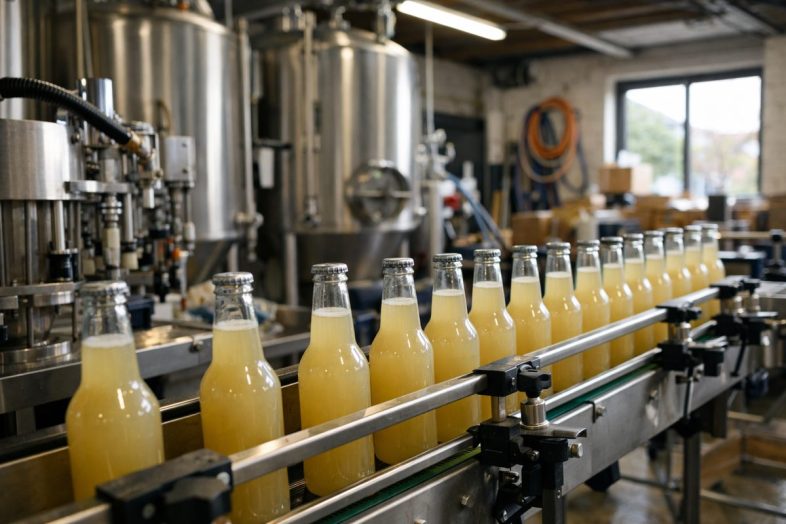
Short answer: If you already bottle beer or cider, you can make a zero-sugar still drink with almost no new equipment. You mix a concentrate with still water in a clean tank, bottle it on your existing line and sell it next to your other products. It gives you something to offer drivers, non-drinkers and families, and it keeps the bottling line busy when beer sales are slow.
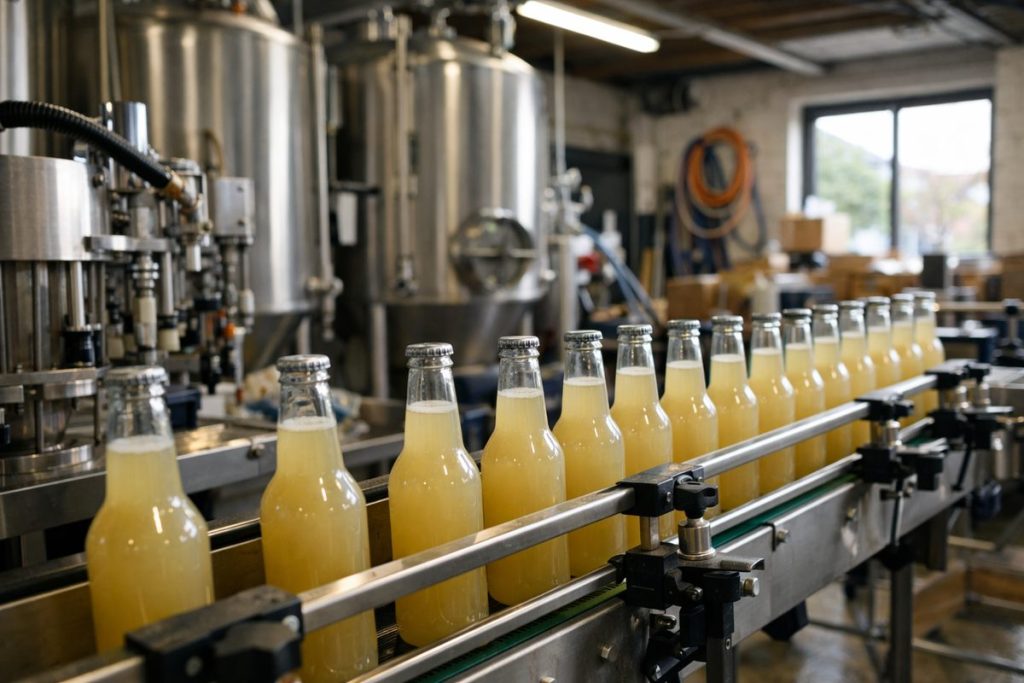
Why still drinks fit a small brewery
Most small breweries have the same problem: sales go up and down with the seasons, and the taproom crowd is not only beer drinkers. Every group has a driver, someone who is not drinking tonight, or someone who simply wants something lighter.
A still drink is a flat, non-carbonated soft drink. Because it needs no carbonation, it is the simplest soft drink you can produce. You do not need a carbonation stone, a pressure-rated tank or a new filler. If your line can handle cider, it can handle a still drink.
There are three good reasons to try it:
- It uses what you have. Tanks, hoses, filler, capper and labeller are already there.
- It reaches new customers. Non-drinkers, drivers, schools, gyms and offices are markets that will never buy your IPA.
- It is low risk. A test batch costs very little, and you can stop at any time.
How it works in practice
A still drink concentrate is a ready-made flavour and sweetener blend. You only add water. The zero-sugar concentrates from Aromhuset in Sweden are mixed 1 part concentrate to 32 parts water, so a 500 ml bottle makes 16.5 litres of finished drink, a 2 litre bottle makes 66 litres and a 5 litre container makes 160 litres.
A typical first batch looks like this:
- Clean and sanitise a tank exactly as you would for beer. Soft drinks have no alcohol to protect them, so hygiene matters even more.
- Measure the water. Use filtered or good quality mains water. Chlorine taste comes through in a flat drink, so a carbon filter is worth it.
- Add the concentrate at 1 to 32 and stir gently until it is even. No heating is needed.
- Taste and adjust. Some customers prefer a slightly stronger mix. Write down what you do so every batch is the same.
- Bottle and cap on your normal line, then label and date-code the bottles.
Flavours that sell
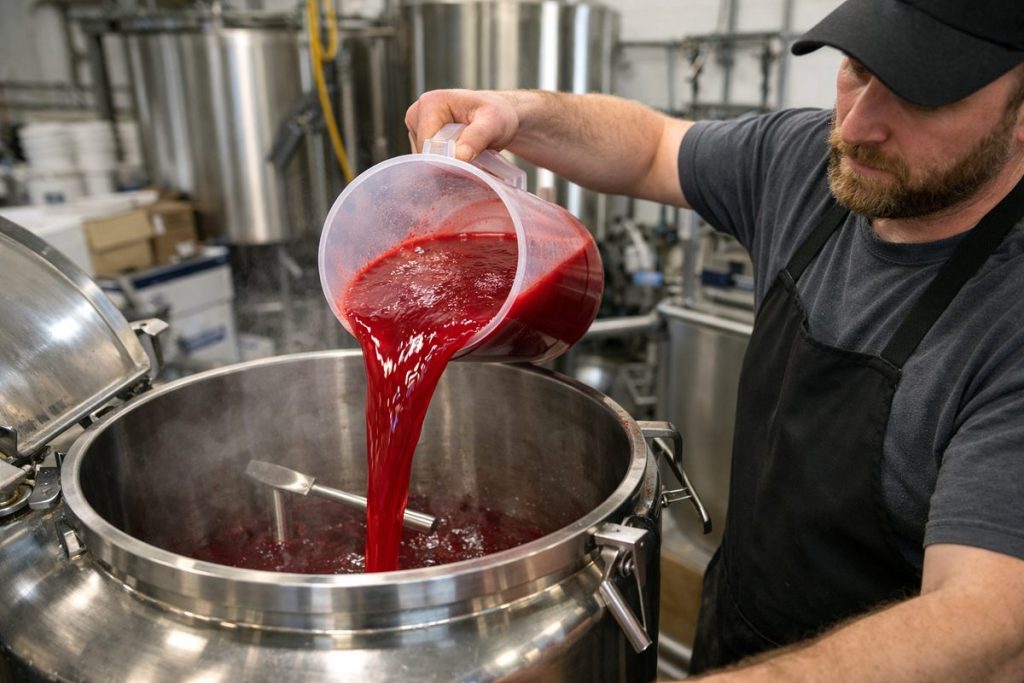
Start with two or three flavours rather than the whole range. Fresh, slightly sharp flavours work best as a still drink. Good starting points are grapefruit, blood orange, rhubarb and pineapple. Grapefruit with passion fruit and grapefruit with blood orange are popular blends, and you can make your own blends by mixing two concentrates.
A local twist helps. “Rhubarb still drink from the brewery on the high street” is a stronger product than a generic lemonade.
What about the sugar tax?
The UK Soft Drinks Industry Levy applies to drinks with added sugar of 5 grams or more per 100 ml. A drink sweetened only with sweeteners, such as sucralose, does not have added sugar, so it falls outside the levy. Small producers who make less than one million litres of liable drinks a year do not have to register for the levy either. Always check the current HMRC guidance for your own situation, but a zero-sugar drink keeps things simple.
Labelling and shelf life
A soft drink is a food, so normal UK food labelling rules apply. On the label you need, among other things, the name of the drink, an ingredients list, the net quantity, a best before date, storage instructions and your business name and address. A drink that contains sweeteners must also say “with sweetener(s)” next to the name. If you are new to soft drinks, ask your local authority food team. They are usually helpful, and you need to be registered as a food business with them anyway.
Shelf life depends on your hygiene, your bottles and how the drink is stored. Do a small storage test of your own before you put a date on the label, and keep bottles cool and out of direct sunlight.
What it costs
The calculation is simple. Take your net price for the concentrate, divide it by the number of litres it makes, and add the cost of the water, the bottle, the cap and the label. Because one 5 litre container makes 160 litres, the concentrate is usually a small part of the cost of each bottle. The bottle and label cost more than the drink inside.
Retailers and businesses can see the trade prices after registering in the shop for still drink concentrates. If you want to build a range under your own name, read our guide to private label drinks on Swedish concentrates.
Getting started
- Make a 10 to 20 litre test batch on a quiet day.
- Let staff and regulars taste it, and ask what they would pay.
- Put it in the taproom fridge first, then offer it to local shops, cafés and events.
- Order more when you know which flavours sell.
If you also run a café or taproom kitchen, see how other businesses make a house soda for a café or restaurant. And if you have not bought from a Swedish supplier before, we explain shipping, VAT and customs after Brexit.