Short answer: Add up five things per bottle: concentrate, water, bottle, cap and label. Then add a share of your time and any delivery or marketplace fees. With a concentrate that is mixed 1 to 32, the drink itself is usually the cheapest part. The packaging is what you need to watch.
Step 1: the drink
Start with the concentrate. Take your net price for one bottle or container and divide it by the number of litres it makes:
- 500 ml of concentrate makes 16.5 litres
- 2 litres of concentrate makes 66 litres
- 5 litres of concentrate makes 160 litres
That gives you the cost per litre of finished drink. Multiply it by the size of your bottle. A 330 ml bottle uses a third of a litre, so it costs a third of the price per litre.
Water is almost free if you use mains water through a filter, but count the filter cartridges if you change them often.
Trade prices for the still drink concentrates are shown to registered businesses. The larger sizes give the lowest cost per litre.
Step 2: the packaging
Write down your price per unit for:
- the bottle (glass or PET)
- the cap
- the label, including printing
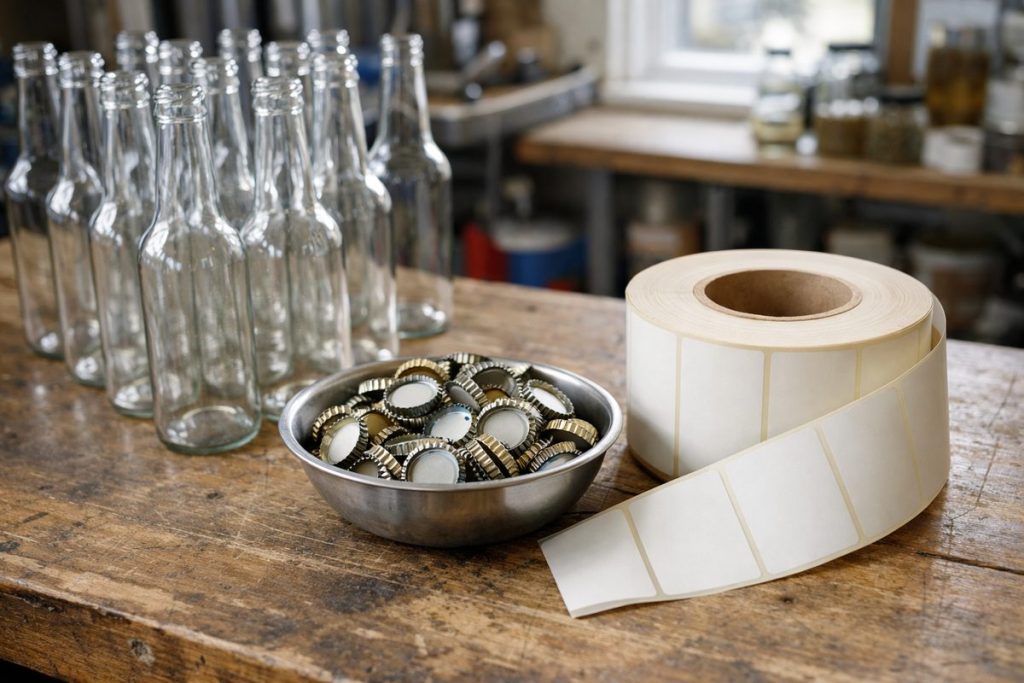
For most small producers these three together cost more than the drink inside. Buying bottles by the pallet from a packaging wholesaler brings the price down, but ties up space and cash. Some producers start with PET and move to glass when sales are steady.
Step 3: your time
Time how long it takes to make one batch, from cleaning to the last label, and divide by the number of bottles. Even if you do not pay yourself yet, count it. It shows you how much you gain by making larger batches.
Step 4: selling costs
Add the costs of getting the bottle to the customer:
- delivery to shops, or postage for online orders
- marketplace or card fees
- the shop’s margin if you sell through retailers
A shop usually wants to make its own margin on top of your price, so your trade price has to leave room for that.
An example to fill in
| Per 330 ml bottle | |
|---|---|
| Concentrate | your net price ÷ litres × 0.33 |
| Water and filter | a fraction of a penny |
| Bottle | your price |
| Cap | your price |
| Label | your price |
| Time | your hourly cost ÷ bottles per hour |
| Total cost | the sum |
When you know your total cost, compare it with what similar drinks sell for in your area. Price by what customers will pay, not by what the drink costs you.
Ways to improve the margin
- Make larger batches to spread cleaning and setup time.
- Buy concentrate in larger sizes once you know which flavours sell.
- Sell some of the volume yourself, in your own shop, taproom or market stall, where you keep the full price.
- Offer a larger bottle or a jug size for cafés, where the packaging cost per litre is lower.
Next steps
If you are new to soft drinks, start with our guide to bottling your own still drink or, if you have a bottling line, zero-sugar still drinks for small breweries. If you want to sell under your own brand, read about private label drinks.